Showing posts with label localtarianism. Show all posts

Wednesday, May 8, 2013

Stuff's Gettin' Real...

by Jas Faulkner

Hi!  My name is Jas Faulkner and this is my second season writing for the ENFM blog. Like many of you, I am continually learning ways to live a cleaner, greener life. Over the next six months we'll explore what the market has to offer.  We'll also look at the history and culture behind farmers' markets, local foodways, and   other aspects of the production and the politics of food in North America.  But first, I need to talk to you about something very important.

 Consider this a call to farms.  

In the past you may have decided to support your local farmers' market based on some abstract principle. You may have done it because it was an emotional callback to a time when nearly every family had someone who lived on a working farm.  You may remember the sweet smell of warm produce picked earlier that day and then lovingly prepared as family shared stories of the past and planned for the future.

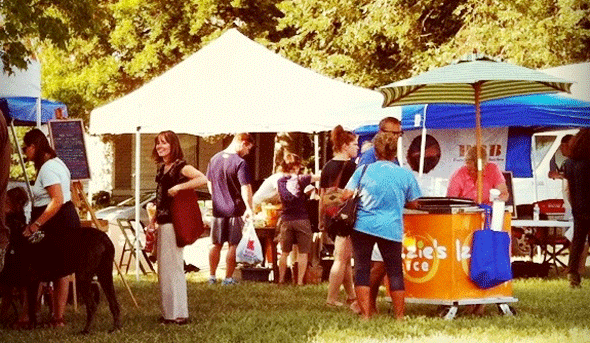
You may have made a weekly trek to The East Nashville Farmer's Market because it's a fun thing to do.  It's a way to meet some nice people who are passionate about growing safe, nutritious food for your community.  Your friends and neighbors are there.  It's a lovely, bucolic space in the heart of the city where children dance to live music and artisans and their families share everything from cheese to salsa to pie to hummus.

If someone asked you why you visit The ENFM, you might have some vaguely pleasant answers about how it makes you feel good. And that's a good thing. You know?  Given the choice, I support local producers and merchants for nearly everything I use in my kitchen and elsewhere. I do a price and availability check at The Turnip Truck and Center of Symmetry first and now that market season is upon us, ::deep breath:: I have another local place to look for what I need (or sometimes just want.)

Here's the thing, and it's kind of a big thing, er, deal:  Stuff's gettin' real.  We can't take for granted that these sources will be around if we don't support them. If you care about preserving Tennessee's agrarian heritage, if you care about what goes into your pantry, if you want to keep something that has become a vital part of community life, you'll understand why it is important to support The East Nashville Farmers' Market.

It only happens on Wednesdays at those magic hours from 3:30 to 6:30 at 10th and Russell. Come on down and meet your farmer!


Monday, March 18, 2013

Go For The Real Deal: Producer Operated Farmers' Markets

by Jas Faulkner
How much do you trust the people who supply the grocery store you support or the kitchen manager of your favorite restaurant to provide food that is safe?  

In a very telling incident, food journalist Michael Pollan visited a farmer who grew potatoes for McDonald's french fries.  During the interview, Pollan asked the farmer if he fed the potatoes to his own family and the answer was an emphatic, No!' The farmer grew his own organic spuds to feed his own clan.  Later in the story, Michael asked for a drink of water and was warned away from filling his glass at the tap.  The farmer's wife explained that the local water was full of pesticides and they bought bottled water to drink.

That was a sad example of a farmer knowing his or her food, and also knowing that he didn't want to eat it. It brings up an interesting question of  how well the people behind the tables at farmer's markets know their produce. Can they tell you where the seeds came from or whether their stock was exposed to chemicals that might remain not only on t he outside of the fruits and vegetables, but have permeated the flesh?  Did those potatoes come from a county away?  A time zone away?  Did they come from another continent altogether?

Once upon a time...
 A farmers' market was exactly what the title suggested.  It was a place where people who grew fruits and vegetables or raised animals for meat could sell what they raised. The advantage was one of both quality and trust. There was a greater sense of accountability on the part of the producers and customers knew that they had a responsibility to support farmers if they wanted to buy food that was locally produced by people they trusted. This worked well because most metropolitan areas were surrounded by farmland. There were enough farmers to feed everyone who cared enough to maintain a locally centered food economy.

As more people moved to the city and the land surrounding those urban areas was devoted to housing, people got comfortable with the idea of buying everything they ate from large corporate producers who created factory-perfect food-like stuff that could come from anywhere. Zero plotline development and the loss of connection to family traditions such as the household kitchen garden cause people to lose a sense of what it meant to eat with the seasons.  The demand for shipped in produce grew and with it, the loss of seasonal eating except for certain holidays.

Over time, people began to miss the feel of buying from a farmers' market, so they sought out places where they hoped to buy fresh, in-season produce.  One thing many of these shoppers didn't think to ask was: "Where did it come from?"


Not All Farmers' Markets Are Equal

A farmers' market is a farmers marker is a farmers market?  Right?  Well, on the surface, that might be true.  The open air ambiance, the smell-of-the-week of whatever is in season, the atmosphere that makes it feel more like a large outdoor party; these are all things that draw people to farmers markets.

So what is the difference and why does it matter?


There are two different kinds of farmers' markets.  The first is the  traditional market where farmers sell what they raise.  The second, and sadly more common in many urban areas, is really more of a reseller's marketplace.  these people often go to food wholesalers and buy large lots of produce.  In some rare cases, they might know the person they are buying from without ever actually seeing where their wares come from.

When you buy from a market that allows resellers,  you run the risk of buying food that might have been raised in less than ideal circumstances. Do you or they know exactly what into the items you're considering for your pantry?  Chances are the person behind the cash box knows exactly as much as you do, which is nothing or pretty close to it. Is that a risk you want to take?

Know Your Farmer
Traditional farmers' markets are worth the investment of time and money.  Eating locally means you are more likely to eat in season and eat in a way that will contribute to your overall good health.  It means that you have the confidence of knowledge and the power to make your own choices about what you put into your body.  It means that you help keep the local economy robust and  food sources close by which is a smart, sustainable way to feed your community.

Most important of all, know your farmers means that you are buying from people who are selling you the same things they are feeding their own families. They get  your support of their hopes and dreams and you get the benefit of years of agricultural education, family experience, and strong personal values that go into organic family farming.

So the next time you think about visiting a farmers' market, look, ask, and make informed choices. Your local farmers will thank you for it!


Wednesday, October 24, 2012

Feeding Ourselves, Each Other

by Jas Faulkner 

During a conversation about the division between acts that are sacred and profane, the act of feeding oneself and others was something that quite surprisingly had the room divided. The profane folks saw the enterprise as something purely physical, for them it came down to the mundane business of  manufacturing and distributing fuel for the human animal. The profane folks were incredibly prosaic about it.  Food goes in, people stay alive at least and are productive at best. I couldn't help but wonder if their response to Soylent Green would have been a shrug and a mumbled response about it being less messy than composting.

The other side, which in the interest of disclosure, included me, saw things a little differently. The practical aspects are undeniable.  In order for it to really work in the long run, there has to be something deeper at work, an awareness of how truly interconnected we are.  This starts with the people who raise our food and continues through those who carry out its distribution and preparation. Beyond the obvious requirements of healthy soil, safe water, and hard work, the not so obvious components are knowledge, trust, and the recognition that we are nurturing, respecting and supporting each other at every step in the process.

Over the course of the season, I have written about the need to know your food sources and the importance of understanding the nature of how they produce what you put on the table.  Now I would like to talk about the table itself.  I'll offer this precis:  Nothing I'm going to say is particularly new.  The subject has been approached by thinkers and observers as diverse as Thomas Merton, John Robbins, Rose Nader, Ward Goodenough, Francis Moore, Lappe, Jean Anthelme Brillat-Savarin, Deb Duchon, Tony Campolo, Jane Goodall, Matthew Fox, Michael Pollan, Marion Cunningham...I could go on for at least a page worth of names.  Let's just say I'm standing on the shoulders of giants.

All of those people recognized how important the act of feeding yourself and your family could be. It is fueling the body.  It is also a promise we give to ourselves and each other that we are caring enough to do what is right and what is best when we make choices about food.  Preparation should be a continuing learning experience for both ourselves and if we share a home with someone, the people we live with. Mindfulness about preparation means respecting the sacrifices that go into the ingredients you use. If you eat meat, it is the recognition of the life that was sacrificed to provide that protein. For everything, it is gratitude to the farmers who decide to make a professional  life borne of either family tradition or an innate dedication to the discipline.

As hard as it can be at times, really as hard as it has been for North American families since the post-war boom of the 1940s', we need to extend that to a shared time around the table. If the act of choice and preparation are bound in trust, the culmination of that is the meal itself.  So much of our consumption happens when we are on the run.  Even if we spend quiet time in the early morning making sure we are prepared to meet mealtimes with healthy food throughout the say, there is still the need for the community of the table. Sharing food is a big part of it, but it is also where we share more of ourselves.

The meal together, whether it is in the morning before we go meet the day or as we close ourselves in for the night is the time when we all get to know each other all over again.  As we are touched by the world, we grow and change.  To miss out on that shared time without television, without outside distractions, is to miss out on those developments, small and large that make us who we are at every age.  We are bonded by what we share when we are most vulnerable,and that is when we settle in and open up to those closest to us.

So much of what we do is segregated by age, interests and other ways we identify ourselves that the communal table should be a daily thing instead of a rare, special happenstance. Think of it as voting everyone back on to the island. It's as easy as passing the peas and listening.

Monday, October 8, 2012

Fall Fest: Wednesday! Wednesday! Wednesday! Come Touch a Tractor!


By Jas Faulkner 


Looking for a cheep thrill this Wednesday?  Why not take your offspring to pet a chicken or touch a tractor at East Nashville Farmers Market?

Now in its sixth year, the ENFM Fall Fest is a great way to see what fresh fare is available from the vendors and spend some low-tech, no-pressure time getting your little rock-and-rollers to consider taking a walk on the country side. 

 According to event coordinator and market director Amy Delvin Tavalin, the event, which started out as a part of the much smaller market in the parking lot of The Turnip Truck, had seven vendors, a bluegrass band and a petting zoo.  

"This is the 6th year of the Fall Fest, we've had one every year that the market has been open, but it gets bigger every year!"

With the foliage changing colors and the weather getting milder, this is the perfect time to come see what you've been missing if you have not yet made it to the magic at South Tenth Street every Wednesday afternoon.  Even if you don't have the excuse of a household small fry with a yen for some face time with a John Deere, there are plenty of events and vendors to delight your senses and inspire your inner Emeril. 

Aside form the kid-oriented events: the petting zoo, touch-a-tractor, and pumpkin- and punkin, er, face painting; each vendor is going to decorate their stand, so you might just pick up some ideas for your own fall decor from our talented crowd of farmers and artisans.  Michael Martin of Whole Foods will be on hand with a chef demonstration that is sure to please the pickiest eater. 

Many newcomers to local fare might not realize how much is available in the the fall. While the choices differ from the summer months, there is still a diversity of good for you and good to eat produce to look forward to trying.    According to Amy Delvin Tavalin, "vegetables will be changing in the remaining weeks- cooler weather brings back the leafy greens along with winter squash, pumpkins,sweet potatoes, broccoli, cauliflower, radish, turnips,  and beets.Some vendors will have fall herbs, flowers, and seasonal desserts as well! 

For Tavalin, the idea of celebrating Autumn in East Nashville is an easy choice:

There's something about the changing of the seasons that inspires community. We're hoping to have the East Nashville community out to help us celebrate Fall and the changes that it brings. Pumpkins, gourds, leafy greens, winter squashes, sweet potatoes, cabbage, broccoli, cauliflower will be making their way in, and that nip in the air that October brings will invite folks to try hot cider, coffee and pie. 

Do you really want to miss this?  That's what I thought. Come out, sample some good stuff and bring more healthy goodies home.  You'll be glad you did! 


Wednesday, September 12, 2012

September 12th and Victory Gardens

by Jas Faulkner


September Twelfth always has a tinge of emotional hangover to it.  As each succeeding 9-12 since Nine-Twelve-Oh-One passes, there is has been a decreasing shock about the 3,000 person-shaped hole in who we were as a tribe and more about who we intend to be in the future. As a people, our circumstance, has been shaped by equal parts natural progression and determination to determine ourselves on our own terms.  Our most American of characteristics, our rugged, sometimes bloody-minded individuality is part of what moves us to look for better ways to take care of ourselves.


Localtarianism is one expression of that stubborn streak that keeps us from giving in and going under in the face of opposition from big business and those who seek the approval/protection they perceive to be the advantages of living in the shadow of corporations.  We continue to look for ways to take care of ourselves and engage our neighbors as we support their efforts to create sustainable local economy based on production that gives us a first hand look at the intricacies of how what we buy is made.  We have striven to know the farmer in the next county, the herbalists and the chicken enthusiasts and the artisans and the neighborhood know-it-all.


 This sort of urban agricultural renaissance really isn't anything new.  The Victory Gardens of the 1940s' inspired a generation to adopt kitchen gardening as a way to supplement the limited food that was available.  It was a practical, healthy way to live and one that afforded Americans the chance to make a positive statement about the strength and resilience of those back on the home front.

At its heart, this was the first wave of the American Green Revolution.  It was the age of everyone from the President to GI Joe to Rosie the Riveter and her mother who not only kept hearth and home but proved she was as tough as Dad and Joe when it came to dealing with challenging times; all because she and they could.  Without really considering it that way, this was sustainability in action.  This is what American character looks like in the real world.  It is what an American who is conscious of how we can help ourselves and help others learns how to think globally and reach out to help.  This is what needs to be reclaimed: feeding ourselves and supporting our neighbors.


All of this makes what happens at farmers markets, local food co-ops and businesses like The Turnip Truck that much more miraculous.  It is not just a cultural survival, but a return to currency for what worked in the past and maintains us. Supporting area farmers and those businesses that foster taking an active part in local food production is and always has been an original "patriot act".  Get back to your roots, both literally and figuratively and visit your local farmers market for produce and goods to help you grow your own!


Wednesday, August 29, 2012

Fall Flavors With Jami from Slocal

by Jas Faulkner

Many novice kitchen gardeners see the cooler months as a time to wind down the garden and subdue the flavor profiles that make summer so vivid.  Actually, nothing could be further from the truth.  Fall gardens offer a tremendous amount of satisfaction both in terms of the spiritual and psychological benefits that come from gardening and the healthy boost that comes from eating locally and with the seasons.

According to  Jami Anderson from Slocal Foods, the bright notes herbs can add to your Fall cooking:

Jami:  As we approach the cooler months, look for cilantro again as it bolts and goes quickly to seed during the summer heat. A second harvest of dill and fennel will also be available soon since any planted in the spring will have since run it's life span. Herbs with continuing availability until the cooler weather hits are basil, lemon balm, mint, oregano, parsley, purslane, sorrel, tarragon and thyme. These will die off for the winter but oregano, thyme, sage, winter savory & rosemary will keep going somewhat during the coldest months. 

Many fledgling gardeners and localtarians want to find ways to keep things growing all year long.  Sometimes even the owners of the prettiest raised beds on the block suffer from a secret shame known as Brown Thumb Syndrome.  Buried in their compost piles are the bodies of violets, orchids, and yes, even cacti  that they or someone else couldn't pass up.  With those dessicated bits of decay in mind, many forgo fresh herbs in the winter.  Should sufferers from BTS reconsider bringing plants inside for the colder months?  How hard is it to tend a kitchen garden in the kitchen?  

Jami:  Herbs will grow only a large as the container you plant them in so plan your pot size accordingly for the amount of each herb you wish to use regularly. Make sure you have a sunny window that gets at least 4-6 hours of sunlight daily, more is preferable. Our customers have had success growing basil, cilantro, dill, fennel, oregano and rosemary when they start with strong, well-established seedlings and don't under- or over-water them. If you are looking to use large amounts of these herbs for pestos & such, you may want consider growing them outside as a window garden usually yields only enough of an herb for accent and flavoring.

Of course this means that space is a big concern.  Never fear!  Herbs can be stored in a variety of ways.  Drying and freezing are two of the easiest methods:

Jami: One way to get that fresh taste once winter arrives is to freeze your fresh herbs and thaw when needed. Wash, pat dry and freeze in freezer bags. They won't be the same texture or color once they thaw but the flavor will be there. You can also suspend them in olive oil and freeze in ice cube trays. This preserves the structure of the herb a little better and cuts down on some of the color change.

You can dry any herb you wish by either spreading it out on a mat, hanging it upside down out of direct sunlight, or drying it in a dehydrator or oven set to a very low temperature. To decrease the chance of mold, strip the leaves from the stems and discard the stems unless you are hanging the herb to dry. Herbs that taste better by freezing are basil and chives although you can freeze most other herbs as well. Experimentation is the key for determining which method you like best for your taste preferences.

Flavor and texture combinations between Summer and Fall are distinctive.  While canning and freezing are a great way to cut food costs once the days get shorter, it's still a good idea to incorporate seasonal produce into the household menu.  How to apply all of this?  Anderson shares some of her favorite combinations and applications:

Jami: Garlic dill pickles - hands down, my favorite! One of our customers gave us a jar of peach preserves she made by adding some of our lemon verbena leaves during the canning process - exceedingly tasty! Russell teaches a canning class twice a year which has been a great laboratory for recipes he is developing and he is working on a pickle relish recipe right now and I'm working on the perfect pickled egg. All customers get a free recipe with any herb purchase at our booth which features the herb in various dishes, both fresh and preserved, and the combinations are endless. 

The ENFM runs through the end of October.  Does that mean Jami and Russell go on an extended vacation?  Not by a long shoot of cilantro!

Jami: We have a website at http://www.slocalfoods.com where we post herbs and other produce we currently have available. Customers can email us from the site to request herbs and we'll hold them back separately at the booth on Wednesdays (we sell out of some herbs every week so this is a wise thing to do.) Customers can also request large quantities needed for catering, parties, etc. This service is available year-round and customers can either pick up what they want at our local garden in east Nashville or we will deliver large herb orders placed during the non-market months (November - April.)

Look for our fresh, organic and locally-grown herbs at the ENFM Slocal booth along with the herbal tea we brew fresh every week. Herbs are sold by the stem AND by the bunch now!  For more information on Slocal Foods, visit their website at http://slocalfoods.com or call  615-480-5347.

Wednesday, August 15, 2012

Living Clean and Green

by Jas Faulkner

My writing for ENFM is usually oriented towards news features as opposed to a confessional style.  However, I am making an exception after getting a very interesting personal message via Facebook.

The letter writer in question wanted to know what my family eats, how we eat, and how we afford to eat the way we do.  They had been to the East Nashville Farmers Market and the Turnip Truck and Whole Foods and had seen the cost of a can of soup and a loaf of bread and a dozen eggs and from their standpoint, it looked like a prohibitively expensive may to manage a home kitchen.

I thought about her letter the other day when I was at Publix to refill one of our water jugs.  I realized I'd left my cash at home and decided to buy something at the store and just get some cash with my purchase.How hard would it be to buy something useful at Publix?  It used to be my go-to for all manner of green, sustainable products for the household pantry.

The produce section was my first stop.  What was in season was trucked in from another part of the continent, sometimes another part of the hemisphere.  If it wasn't, it was something my family grew or we bought from a local farmer.  Bread and pastries?  We bake our own. As for the middle of the store, we usually follow the advice given by Michael Pollan and Chicago Chef, Rick Bayless and keep to the periphery of the store as much as possible. When I did venture down a given aisle, I found that what they had to offer was either something we bought from a family owned, fair trade, or local producer (cereal, staples for baking, oil, crackers) or it was something we already made ourselves (nut butters, mayonnaise, most of our pickles and relishes).  I finally settled on a block of organic cheese, took  my change and got my water.

You might be reading this and thinking, "The woman walked all over a Publix and acted like my nine-year-old in front of our semi-filled refrigerator on a Thursday after a Saturday grocery run.  What DO you eat? Tofu and lawn clippings?

The truth might surprise you. While I am not completely meat-free (yet), meals at my house consist of a starch, a protein and vegetables.  I know. How exotic.  Here are some other facts about how we live:  There is little in my household that is processed and has more than five ingredients.  One of the goals everyone in the household keeps when shopping is to avoid foods with more than five ingredients or ingredients that would not be recognizable to most great-grandmothers as a food item or a pantry staple.  What meat remains, our dairy, our eggs, our produce, are all local.  We dehydrate, can, and freeze our surplus as a hedge against high prices in the winter.  We use as much of everything as we can. .  All food waste is composted or fed to animals who live in the small wooded area behind the house. Putting out the trash for us usually consists of one small bag a week for the people who are contracted by the city, a box of glass bottles and a plastic storage box of paper,boxes and recyclable plastics for a private recycling company.

One final fact:  Our monthly food bill averages around three hundred and fifty dollars a month.

Want to know more?  Here are some websites that have served as valuable resources for us.  We recommend the books and magazines attached to these sites as well and encourage you show your support for these individuals and organizations by buying what they publish.

Michael Pollan's Website                       Food Politics - Marion Nestle's Website

 Mother Earth News                              Grit

Urban Farm Online                                Earth 911

ReadyMade                                          Instructables

Slow Food International                        Rodale

Wednesday, August 8, 2012

The BEhive Reaches Out To Make Life A Little Sweeter

by Jas Faulkner
(Images still aren't working, people. Apologies to everyone involved!) 

"The Heart-Hive logo signifies that we are a collective, much like an actual bee hive, with only good natured intentions that come from the heart. We are where we live; we are what we eat, and we all have the responsibility to protect and nourish both. The BE Hive is the vehicle for this philosophy."
                            -Benjamin, The BEhive                                    

Wednesday afternoons at the farmers market are always a feast for the senses. There is live music coming from the gifted musicians who offer to play in the center of the park.  The colorful tents compete with the brilliant hues of fresh produce and artisinal goods that catch the eye from every direction.   Among the smells of handmade bars of soap and fresh cut herbs, there is the aroma of grilling that wafts its way around the square, beckoning the hot, the tired, and the hungry to get a good, healthy bite while they are there.

You may have walked by that booth, the one with the curious, engaging logo that is part heart, part beehive.  What is it all about?  What can this mean when you encounter the delicious food, the artful presentation, and the general good vibrations? 

Meet the BEhive.  It’s a band, it’s a creative collective, and it’s a force for good in Music City.  You may have seen ads for their benefit buffets at The Wild Cow.  (You haven’t been to the Wild Cow yet?  Why not?)  You have walked past their table, paused because, yes, that grill is tempting and then walked on.  To that, I say, quit being a baby and go get you some very good and good for you dinner.  You’ll spend a lot less than you’d spend for the fake fast food-like stuff they sell on Gallatin Road and your tastebuds and metabolism will thank you.

So, you're going to follow your nose and pretty soon your tastebuds are going to be convinced...but how did this come about?  We talked to Benjamin, one of the founding fathers of the BEhive:


Well, it all started with a band, Born Empty, who all lived in the same house appropriately called The BE Hive. We were a group of dudes that could express ourselves in any way we liked, and as long as the message and approach was positive, nothing else mattered. Every couple months we held vegan potlucks at our house, The BE Hive. These potlucks were amazing with upwards of 70 people at times, a bonfire, and a kitchen overflowing with vegetarian dishes people had prepared and brought over. We eventually moved out of the house, held a couple potluck fundraisers at The Wild Cow, and then came up with the idea for this buffet and business model.
But BE is more than a band; it's a way of life. The BE Hive is about taking care of yourself, and doing what is right for you. We try to inflict the least amount of negative impact on people and the world around us, while positively influencing those who care to take notice and are open to different ideas. There are a lot of things that are wrong and misguided within our society, but the bottom line is you can't change anyone. People have to want change, and then control their actions towards doing so. This is why we lead by example, and just BE.

Uh.  Wait a minute.  Did he say...vegan?   As in... no meat, no dairy, no... as in VEGAN?

And I said to quit being a baby.

Here's what Benjamin had to say about omnivores and reluctant others who think it's all sprouts and bare, cold blocks of tofu:  

 Ha! I'd say don't tell them it's vegetarian! But I usually tell them that they just need to try the right things. Then I guarantee/challenge them that if they came to the buffet or let me cook for them, I could fill them up beyond their wildest dreams. A lot people associate vegetarian dishes with only salads,  tofu, and weird and pushy vegetarians ready to jump down their backs for eating meat. There are several alternatives to all those things, and with the right protein and side choices, you can fill up most anyone and have them be completely satisfied.
Anyway, Nashvillians are getting smarter about the ways they feed themselves not only in terms of what happens on the inside, but how it effects everything on an environmental and economic level.
 I'm seeing a big farm to table push recently among restaurants. I think one of the things that led me to being so strict and curious about my diet was they way people ate and lived their lives. Seeing this push makes me hopeful that more people are being conscious of the crap they are putting in their bodies (not limited to meat, but also vegetarian items), and push the local organic farming scene while keeping people away from genetically modified and over processed foods
You know, or will know the food is good and they are green to the marrow, but more important than that is what is at the heart of the BEhive: the creative spirit that fosters commuity and the causes they support.


The Collective part of The BE Hive involves the customer, host restaurant. farms, community, the organizations who support the community, and the Hive itself. The gifts people bring are themselves. The customer brings their money, eats healthy food, and walks away feeling nourished and good knowing that some of their money is going towards bettering their community in some way. The host restaurant is associated with a fundraiser, continues to have a day off, gets free advertising, and also walks with some extra money. The community is supported by the non profits that are being benefited. The farm gets the extra business and exposure, and the Hive gets to help people, be creative, build their business and menu, and also profit a little.    
We try to support local organizations with green and sustainable motives.  We like to support the bike community, famers, the arts, kids, and whatever else makes a difference. My favorite organization that we have benefited so far has been the Glencliff Garden Project. They teach high schoolers how to start and maintain gardens while also introducing them to the world of plant based whole foods instead of the more processed food items which are more easily available to the majority of kids in this nation.
So what's ahead for The BEhive?  Tomorrow they are participating in a benefit ride for Bejamin Waldman and on the 14th, they will resume their buffets at The Wild Cow, with an Indian menu benefiting Good Food For Good People.
We plan to continue the buffet and the farmers market, and hopefully add a location or two. We want to have several fundraiser events a month in different spots around Nashville and continue to use other peoples empty kitchens while building our menu and developing our catering abilities. We have some things up our sleeve, but nothing is definite yet. We plan to expand though, and I promise it will be done in a very different way then you've seen before.
Being a force for good can be as life changing as creating a business that does so much for so many.  It can also be as simple as changing the way you do a few things at home. ENFM blog asked Benjamin what three things he would like to see people do to make Nashville a greener place:
I'd like to see Nashville become a more bicycle friendly place, riders and drivers both included. The recycling in this town SUCKS, and I feel that needs to be overhauled. And I wish all public places would be smoke free. Nashville is behind the times with all of these things, and I think its about time we wake up.
To learn more about The BEhive, visit their website at www.BEthehive.com
and follow them on Twitter and Facebook for up to the minute news on what the guys are up to.


Wednesday, July 11, 2012

Nashville Foodscapes: A Gentle Approach to Revolutionary Change

 by Jas Faulkner


"I am most proud that more hands are getting dirty, and that more mouths are eating local."
                    -Jeremy Lekich, Nashville Foodscapes


Like many Green visionaries, Jeremy Lekich has a lot of faith in the people he hopes to reach.  Souls on such a mission are often presumed to be impatient, wanting to see big changes sooner rather than later.  Lekitch has taken the time to understand his chosen audience. To him, the pace that Middle Tennesseans take when it comes to change seems about right.  


"Nashville people take their time with it. The Southeast is behind most other areas of the U.S. in terms of moving towards "green" living. I do not believe this is bad or good. It just means we are taking the time to do it well."


Lekich is one of the minds behind Nashville Foodscapes.  He wants to see more people filling  their souls, tables, and pantries by gardening.  Many prospective farmers find anything beyond a planter full of patio tomatoes daunting. Lekich recognizes this.  In fact, he maintains that the perception that you have to know everything from the beginning is one of the more common objections Nashvillians raise when the subject of permaculture gardening comes up. 


"I believe the biggest challenge for people is to not become overwhelmed by all there is to learn. The knowledge base for living a life of good stewardship is wonderfully huge and can be intimidating. But you start with what you are interested in and move from there. Overall, this type of living creates a life with no boring or dull moments...there is always more to learn." said Lekich.


What is permaculture gardening and how does it differ from the Victory Gardens of the previous century and the sustainable household gardens that are touted as the next big thing in the slow food movement?  Permaculture gardening is a far more interdisciplinary approach.  Instead of clear demarcations that separate the form and function of space, the landscaping flows between plants that are designed to maintain the health of the soil, plants that are meant to beautify where we live and plants that are intended to produce food for the household.  Some plants might meet one of those needs while others do double and triple duty.  The goal is to create a synergistic environment that feeds the body, mind, and soul.  


For Lekich, this means thinking beyond the basics of sustainability:  "To be honest, I am not a proponent of the "sustainability movement". We need to move beyond sustainability. Sustainability asks that resources are not depleted and that we put in as much as we take out. Our resources are depleted... and polluted. We need to detoxify our resources and put in more then we take out. That is regeneration. Lets become the regeneration movement."


The spark, or rather the seed for Lekich's ideas began to germinate while he was still in school: "The main inspiration for Nashville Foodscapes comes from a Permaculture garden I worked on at Warren Wilson College. Beauty and food weave together so gracefully in that garden and the abundance and variety of foods is awesome.  It was a long dance with that Permaculture garden that eventually manifested into Nashville Foodscapes. 


It was the best preparation I had. I came into contact with a myriad collection of fruit trees and shrubs, fruiting vines and canes, vegetable, herbs, and more. I learned how to grow these plants, give care for the plants, propagate these plants, and eat these plants. From there, I have expanded my knowledge by reading, talking with others, and exploring the areas around me. "


To learn more about permaculture gardening, visit Nashville Foodscapes at East Nashville Farmers Market.  You can also contact Jeremy and his team by visiting his website: http://nashvillefoodscapes.com/


Wednesday, June 27, 2012

Delvin Farms' Green Revolution Is A Family Affair


by Jas Faulkner

“People are not going to buy produce with spots on them.”  
Family matriarch Cindy usually had a lot of faith in the next generation of the Delvin Family.  With one son having recently returned from a stint in the Peace Corp and a daughter who had found a new mission in life inspired by her urban middle school students, the idea of taking the farm one step further into a movement that could make the world a better place seemed well-intentioned, but far fetched.

The Delvins were already successful farmers.  From the beginning of their business in 1972 they had built up a clientele that included household names to most Middle Tennesseans such as Kroger and Shoney’s.  Their thriving twenty-five year old farm wasn’t in need of any kind of makeover.

Amy Delvin remembers that summer in 1997:
“During my brother’s time in the Peace Corp, he had observed farmers using methods that were passed down from one generation to the next.  He came home and tried to tell our parents that there was a way to have successful crops without using conventional technology: pesticides, chemicals, GMOs. 
 “Dad gave him a section of land so he could try it. He used organic methods to grow heirloom tomatoes, for which he got four times as much as Dad got for his conventional tomatoes. That was all it took for him to see that people would be willing to buy organic produce.”


Of course the bottom line was a consideration, but Hank and Cindy Delvin had always taught their kids the importance of maintaining a strong set of principles behind whatever they chose to do.  In a family that valued learning, growth, and doing things the right way, exploring more sustainable ways to farm was the logical next step.
 “My parents originally focused on one or two kinds of tomatoes, greens, and very  traditional, familiar  varieties of produce. We grow a greater variety of vegetables now.  People are more aware of what’s out there and so the demand is greater –not only for organic produce- but heirloom varieties as well.
“Growing up on a farm, you’re aware of the importance of taking good care of the land.  We began to educate ourselves so we could do what was necessary to become a USDA certified organic farm.”
 Part of that transition included expanding and changing their customer base. This would mean reaching out to a new kind of consumer.

Amy Delvin Tavalin prepares for
an afternoon at the Farmers Market.
Amy Delvin Tavalin had returned to the farm after years of teaching at a middle school in Baltimore.  During a discussion of Harper Lee’s “To Kill A Mockingbird”, she had what some people would call a “lightbulb moment”. 
“We had just read the scene where Jem and Scout were in Boo Radley’s collard patch and one of my students asked me what a collard was.  I realized that these kids grew up never knowing what it was like to have someone in the family living and working on a farm.  Many of them didn’t even have grandparents who gardened.  They had no sense of where their food came from.”
She implemented some opportunities for her students in Maryland to learn more about farming, but realized her family farm back in College Grove, Tennessee offered an opportunity to educate children (and adults) about the importance of agriculture.  Working with educators in Tennessee she created programs that gave kids a day on the farm who might have gone their entire childhood without the chance to see a tomato ripening on the vine.

The new model of agribusiness they were following would offer the public another way to be more directly involved with getting their food from the field to the table.  By 1998, the 140 acre farm* was certified organic and in 1999 they began their CSA with 90+ subscribers. The philosophy was straightforward: provide a way for consumers to buy their produce directly from the people who grew it.  This would eliminate any mystery about the identity or the producer or the quality and safety of the product.

Ironically, simplification for customers meant a whole host of challenges and expenses for the Delvins.  The certification process was much more than just a matter of paperwork and fees.  Inspectors had to flown in, housed and fed, all at the expense of the Delvins.  In order to be able to identify as USDA Certified Organic, they had to submit to inspections of the land, the equipment and all of their paperwork, which has to account for the chain of custody and provenance of the seeds they use. 

Is it worth it? The Delvin Family seems to think so, and so do the over seven hundred subscribers who participate in their CSA.  Every year they enjoy weekly boxes of in-season produce from the farm that now grows over 80 varieties of organic fruits and vegetables.

When asked what plant had grown the most in popularity, Amy says it has to be kale. 

“We were the sole provider of kale to Shoney’s for a long time.” 

According to Shoney's logic,
kale was just too pretty to eat.
Anyone who ever visited a Shoney’s is probably trying to recall seeing kale on the menu. The truth is, it was never offered as part of their fare.  Diners certainly saw it on every plate to emerge from the kitchen, not to mention all over their salad and breakfast bars.  Remember those large, dark green leaves underneath certain entrees and buffet offerings and the curly green sides on every plate and around the edges of the buffet stations?  That wasn’t parsley, it was kale from Delvin Farms.   
“That’s right,” says Ms Tavalin,  “One of the healtiest items we grow was originally used as a decoration.  We sold them boxes upon boxes of kale and my mother would always try to talk them into cooking it.  She told them they could serve it just like any other green.”
Chef and slow food activist Rick Bayless advises anyone who wants to eat better to "get your food from the periphery of the store."  Take it one step further and get your food from the remembered periphery of a Middle Tennessee culinary institution.  This time, it's not about eating something on a dare from your big sister, it's tasting what you've been missing.

*Delvin Farm has grown considerably since then.  They now have 220 acres.


Friday, June 22, 2012

Time To Get Adventurous!

by Jas Faulkner 
author's note:  Next week, ENFMBlog will feature an interview with Amy Delvin.  We'll talk about the history of Delvin Farm -and- cue some scary music here, find out which healthy market mainstay started out as almost unidentifiable industrial decorative matter.  You won't want to miss it! 

A nutritional anthropology study conducted by the University of Florida in 1988 suggested that North Americans had better access to a bigger variety of healthy, fresh foods than most of the rest of the world and yet the average consumer limited themselves to approximately eight to twelve different plant-based foods.  In the quarter century (give or take a few months) that have gone by since then, Americans have begun to put more thought into where their food comes from and how it is produced.

The effort to localize production and consumption has led to rethinking heritage and indigenous food crops that had fallen out of favor.  Our culinary vocabulary is starting to expand and with it comes a more extensive repertoire of dishes and techniques that sometimes start out as experiments and eventually become familiar household favorites.

There are plenty of reasons people don't eat specific varieties or whole categories of fruits and vegetables.  Sometimes it can be a question of rediscovering a favorite that a grandparent might have grown in the summer. Sometimes it means trying a food you've heard of but never tasted.  Sometimes its simply a matter of access. Whatever the reason, local growers are eliminating those excuses.  Which reminds me of one last excuse: you tried it and you didn't like it.

If your parents were like mine, they probably asked you to try at least a bite or two before deciding it was off the menu for you.  Okay.  I'm going to make that same suggestion.  If you see something in your CSA share or it's sitting there in your sample box, and you know this food makes you sad to even think that someone somewhere considers it edible, just stop.  Don't ask to swap it out.  Don't try to palm it off on the nearest child who looks like he's dying to carry something fresh to Mommy. In short, quit being a baby.

Here is a list of seven foods to look for that you may or may not have tried. If they're not in season right now, they will be soon.


Kale

Kale - curly or luxuriantly leafy, this green is packed with nutrients and flavor.  Try it sauteed, in soups, chopped and raw in salads.  One of the classic dishes for this veggie is a stew made with cannellini beans, kale, and chicken.


Collards
Collards - They are a food of the gods.  You can usually find them bundled together in bunches of four to six large leaves. If you want to try something beyond the usual greens-n-pork preparation, take a look at this recipe from an earlier ENFM post: Collard Greens w/ Poblano Chiles and Chorizo. 


Basil
                                                                                                                      Basil -  This sweet-smelling herb is the primary taste profile in pesto and margherita pizza.  It also makes a great aromatic garnish for cold ades and a soothing addition to an herbal bath.   Try a few leaves  on a toasted sandwich with fresh tomato and provolone.


Arugula
Arugula - Steve Martin's character in "My Blue Heaven" couldn't live without it.  This peppery green makes a great addition to any salad or stir fry.  Great on a fresh tomato sandwich or served as a finger food a la cress.  


Garlic scapes
Garlic Scapes -  The tender, curly blooming stalks of garlic are often trimmed so the bulbs will grow bigger.    Lucky you if you find anyone selling them!  They're great in stir fries, caramelized over milder cuts of meat and cooked into pasta sauces.  2 Sisters Garlic has an entire page devoted to ways to prepare garlic scapes. 


Was Geno's Cup win fuled by his
mama's lucky borscht? 
Beets - Most people have tasted them pickled or as crispy veggie chips. The roots are great roasted. The greens?  They perk up a tossed salad and fit right in with any kind of greens mix, cooked or raw.  For a change of pace, go for the tried and true.  Every year, the Pittsburgh Post-Gazette posts Natalia Malkin's Lucky Borscht Recipe.  Does it work?  You might not lift the cup like Evgeni did in 2009, but you'll find it is a tasty piece of Russian culture and a good way to use beets.


Sweet potatoes
Sweet Potatoes -  Many of us were scared away from this nutritious root vegetable by the glutenous casserole that seemed to appear at every big family dinner.  Topped with burned marshmallows, each mouthful was a minefield of mush and the odd stealth pecan half that might or might not have been properly shelled.  Ah, the holidays!  The good news is that sweet potatoes don't have to be such gut bombs.  They're delicious baked with a little butter or olive oil and a pinch of red pepper.  Rick Bayless has a recipe for  a healthier version of baked sweet potato fries that will make you forget that scary concoction your sweet Aunt Estelle used to bring to family gatherings.


Honestly, it's just a vegetable!

That should get you started.  Okay, Indiana Jones, get out there and try something new to you.  There won't be a test, but there will be another list with some more familiar-but-not-to-you vegetables.  Until then, bon appetit!  

Tuesday, June 12, 2012

Labels and Fables: The Truth About Organic Certification

by Jas Faulkner 


One of the more difficult to navigate talking points when it comes to generating interest in buy and selling local products is the price.  Everyone wants to do the right thing, but there are few, if any consumers who don't balk the first time they see exactly how much they are going to pay for a bundle of kale or a pint of tomatoes.  No matter how pretty they are, no matter how good they taste, there is still the matter of the cost.

The matter can get even touchier when  vendors at some markets (who are more often than not resellers) claim that "organic certification is nothing but a label."  Some vendors and even some growers will go so far as to make claims that their produce is organic "in every way except by name."  The problem comes down to how the definition of organic could vary from grower to grower.    Even if one works with the idea that everyone is operating with the best of intentions, there is still too much guesswork involved and at this stage, with so much that is questionable being defined as potential food, it's also a bit risky.

Some people claim that the question, to be or not to be organic, comes down to paperwork and expense.  Looking at it from that perspective, it's easy to dismiss the protests that, in spite of the fact that there are fewer chemical or technological interventions going into organic crops, they are costlier to produce.  During an interview with Amy Delvin of Delvin Farms she discussed the process that farmers go through in order to get certified by the USDA.  Aside from the mountain of paperwork, farmers must keep meticulous records about the sources they use for their seeds and everything else they employ in the business of growing their crops. In addition to those formalities, each farmer is completely responsible for making arrangements for the required inspection by a USDA agent.  Doing so isn't as simple as paying a fee and waiting for someone to show up from the local agriculture extension office.  Farmers are on the hook for airfare, accommodations, a per diem for meals on top of the fees they have to pay for the inspection itself.  Once a farm passes the test, they are also required to pay a percentage back to the USDA National Organic Program.  The process of record-keeping and proof of compliance is unending.

At the same time, it has its rewards for both growers and their customers. For farmers, there is the satisfaction of having proof of the hard work that goes into creating organic crops.  For consumers there is the confidence that comes from knowing beyond a shadow of a doubt that the food you put on your table is safe .   How to tell if the person who grows your food is certified?  Look for the seal pictured above.  Ask questions. Rodale has some useful tips for finding out if a farmer is organic right here. The mission of ENFM is to create a place for you to get your food directly from the person who raised it.

That kind of relationship is actually kind of rare  in today's mercantile economy, and yet it occurs at  210 South 10th  Street over and over from 3:30 to 6:30 every Wednesday.  What are you doing this coming Wednesday?  Why not join us?