Showing posts with label organic. Show all posts

Monday, October 8, 2012

Fall Fest: Wednesday! Wednesday! Wednesday! Come Touch a Tractor!


By Jas Faulkner 


Looking for a cheep thrill this Wednesday?  Why not take your offspring to pet a chicken or touch a tractor at East Nashville Farmers Market?

Now in its sixth year, the ENFM Fall Fest is a great way to see what fresh fare is available from the vendors and spend some low-tech, no-pressure time getting your little rock-and-rollers to consider taking a walk on the country side. 

 According to event coordinator and market director Amy Delvin Tavalin, the event, which started out as a part of the much smaller market in the parking lot of The Turnip Truck, had seven vendors, a bluegrass band and a petting zoo.  

"This is the 6th year of the Fall Fest, we've had one every year that the market has been open, but it gets bigger every year!"

With the foliage changing colors and the weather getting milder, this is the perfect time to come see what you've been missing if you have not yet made it to the magic at South Tenth Street every Wednesday afternoon.  Even if you don't have the excuse of a household small fry with a yen for some face time with a John Deere, there are plenty of events and vendors to delight your senses and inspire your inner Emeril. 

Aside form the kid-oriented events: the petting zoo, touch-a-tractor, and pumpkin- and punkin, er, face painting; each vendor is going to decorate their stand, so you might just pick up some ideas for your own fall decor from our talented crowd of farmers and artisans.  Michael Martin of Whole Foods will be on hand with a chef demonstration that is sure to please the pickiest eater. 

Many newcomers to local fare might not realize how much is available in the the fall. While the choices differ from the summer months, there is still a diversity of good for you and good to eat produce to look forward to trying.    According to Amy Delvin Tavalin, "vegetables will be changing in the remaining weeks- cooler weather brings back the leafy greens along with winter squash, pumpkins,sweet potatoes, broccoli, cauliflower, radish, turnips,  and beets.Some vendors will have fall herbs, flowers, and seasonal desserts as well! 

For Tavalin, the idea of celebrating Autumn in East Nashville is an easy choice:

There's something about the changing of the seasons that inspires community. We're hoping to have the East Nashville community out to help us celebrate Fall and the changes that it brings. Pumpkins, gourds, leafy greens, winter squashes, sweet potatoes, cabbage, broccoli, cauliflower will be making their way in, and that nip in the air that October brings will invite folks to try hot cider, coffee and pie. 

Do you really want to miss this?  That's what I thought. Come out, sample some good stuff and bring more healthy goodies home.  You'll be glad you did! 


Wednesday, September 26, 2012

Waste Not, Want Not

by Jas Faulkner

Waste not, want not.  Few would argue with the wisdom of such a principle, but even fewer fully understand the extent to which it can be carried out in household, much less kitchen management. The idea of low to no household commodities waste is sometimes dismissed as a quaint, antiquated holdover from grandparents and great-grandparents who survived the economic depression that hit the US between World Wars.  To many, it has been rebranded.  Gramma's frugality now bears the shiny new title, "sustainable living."

Is this a bad thing?  Absolutely not. In fact, to cadge a phrase from Martha Stewart, it is a very good thing.

Like organic food production, upcycling/recycling/using every bit of everything from snout to tail is a shiny new concept surrounding older ways that have been kept alive by choice and circumstance.  Those who live in less developed parts of the United States, citizens of aboriginal North American reservations, urban dwellers who understand the need for commodities to be used up of because of the lack of space and resources for disposal, and yes, many college students.

Think you're already using everything in every way possible?  Here's a quick way to tell if that is the case:  What does your curb look like on the days the garbage truck rolls through?  If you're doing everything you should be doing, your average household waste for that week should fit into one, maybe two t-shirt bags.

No? Are you still screaming (on the inside, where it counts) "Hefty! Hefty! Hefty!" as you trudge to the sidewalk?   It's okay.  We all do it sometimes. If you're doing it every week, you need to know that it is possible to wean your wastebaskets and trash cans from a steady diet of stuff that could be recycled into rugs, clothing, planters and even fashionable vegan shoes. Keep in mind this kind of change does not have to be a zero sum proposition.  You can start small.  Just start!

Let me help you out with this.  Do you eat Annie's Mac 'n Cheese?  The next time you're in the mood for comfort food and you tear open a package, ad you're waiting for the water to boil, take a look at the box. Yes, the bunny is cute and the bumper sticker offer that has been open since I was an undergraduate is still on the side. What you'll also find are tips on how to reuse that box before it finally ends up in your recycling bin.

Low to no waste isn't limited to paper and plastic.  Take a look at that pretty yellow oval in your CSA box.  For those of you who have never tried spaghetti squash, you're missing out.  It has the texture and taste of a good veggie pasta prepared al dente the way the school cafeteria ladies never intended. Don't let this tasty, healthy treat go to waste.

I consulted with my friends and fellow veggie fans, Sylvia and Bill  Red Eagle, on the best ways to use every bit of a spaghetti squash.  Starting from the inside out:

Seeds: The tangle of seeds and mushy, fibrous stuff needs to be removed before the rest of it can be cooked.   Once you've scooped it out, begin to knead it and you'll find the seeds will start to fall out.  Rinse them off, buff them barely dry with a clean dishtowel and then spread them out on a cookie sheet.

They're great plain or you can season them with any of the following: cayenne, chili powder, garlic salt, grated parm or asiago, or cinnamon and a little sugar or (a tiny, tiny amount of) stevia if prefer a sweet snack.  Once you've seasoned them or not, pop the tray in an oven set at 275 degrees for five to ten minutes or until the seeds are dry, crisp, and slide around.

This recipe works with any squash or pumpkin seed and those seeds, called pepitas by my father's people (who also refer to corn as maiz, go figure...) are a great source of protein and fiber.  One cautionary note:  they are very rich in Omega-6, which do weird things to Omega-3s, which you and I and everyone we know  needs.  So, as Cookie Monster might say, they're probably best eaten as a sometimes snack when you happen to be cooking a winter squash.

Flesh:  Some people boil it, some steam it, the Red Eagles like to cut it in half and bake it flesh side down until the fibers pull away into "noodles".  They like it as a side with butter, salt and a little sauteed garlic or garlic scapes when they're in season or as a "chili mac" when the weather in Ft. Worth gets a little colder.  I like it topped with a good "tom 'n three plus" marinara ( tomatoes, onions, garlic, peppers plus herbs and wine).

The Skin, Stem and Seed Muck:  All of it composts beautifully.  If you have established a place for birds and other neighbor critters to visit and grab a bite, you'll find that they see the seed muck is like, the best snack ever to squirrels, titmice and black capped chickadees.

So, let's review.  You started with this ornery hard thing that you wondered if you could use as part of a centerpiece or a decoration for the guest book table at church and now you have a tasty snack, a great meal that is light on the carbs, and some good karma from feeding your fellow earthlings.  Best of all, none of that ended up in the trash.

Hungry for more?  Talk to your local farmer about their favorite ways to use winter squash.  You might want to check out these recipes by two of my favorite chefs/foodways preservation advocates:

Emeril Lagasse's herbed spaghetti squash is an easy dish after a rushed day.

Rick Bayless' "Worlds Greatest Chili" includes winter squash as part of his refit of a home kitchen classic.

Bon appetit and keep green!

Wednesday, September 19, 2012

Good Guys Wear Blue Corduroy

by Jas Faulkner 


Theirs was the kind of cool that defied the usual taxonomic constraints of senior high school hierarchies.  Laconic and for the most part unworried by the usual sturm and dang that plagued teens determined to make those three years the BEST years of their lives by being the BEST class EVER, they moved through life at their own pace.  Small, close-knit groups of clean-shaven, baby-faced boys and smartly turned out young women walked the hallways, self possessed, impervious to the handfull of students who sometimes catcalled them without fully understanding their own concomitant loathing and envy. They followed an agenda that addressed few of the concerns of the so-called lives that flittered inside the snow-globe insularity of high school's social order.  The timetable and values they followed were those of the real world, the world beyond classrooms.

 What set them apart visually from other self-contained groups, the kids who would grow up to work for Cessna and Boeing and IBM and NASA, were the jackets. Those zippered, cobalt blue, wide wale corduroy jackets with the oddly old-fashioned embroidered logos on the crest and back identified members of FFA, the Future Farmers of America.  They were worn with pride by students who were either continuing a family tradition of farming and ranching or contemplating a move beyond the suburban nine to five careers of their parents.

Actually, there are still kids getting, no, earning those jackets every year.  According to the latest figures, over half a million young people ages twelve and up have answered the call to learn agricultural science.  Many of them will be in FFA until graduation and then move on to other things.  Aside from the artifacts and memories, they'll have a deeper understanding of how important it is to have a vital, thriving agricultural sector within the economic makeup of our country.  They will respect how important it is to not take for granted the labor, the availability of resources, and the significance of knowledge and commitment to farming that keeps everyone fed and secure.

Food security is not just organizational lip service.  It is a very real value that is at least three shifts each to helping assemble meals for distribution to areas where hunger is a problem.  Their goal this year is to assemble one million meals as part of their Rally To Fight Hunger.  This initiative not only employs young hands, it engages hearts and minds as attendees learn more about the root causes and possible solutions to food scarcity on both local and global levels.

Those who choose to follow the creed* into adulthood by stepping into the family business or pursuing agriculture as a major in college find that FFA continues to offer support.   The organisation provides scholarships and opportunities for mentoring and leadership either in the capacity of apprenticeship or as an educator for the next generation of Future Farmers.

To the many children who come together from diverse backgrounds to be a part of FFA, those blue jackets are not just a quaint fashion statement to be discarded when other inclinations hold a greater attraction.  They represent a serious commitment to the kind of stewardship that goes beyond youthful promises for short term involvement.  When it's done right, FFA is life-changing.  It is their chance to be part of something good, something bigger than themselves that has fostered personal growth since that first gathering of teachers and students at Kansas City in 1928. It is, in the truest sense of the expression, a way for  young people to be empowered by knowledge and to gain confidence in their abilities as agents of positive change for the future.

Want to know more?  Visit the FFA's homepage at: https://www.ffa.org.


*The FFA Creed:

I believe in the future of agriculture, with a faith born not of words but of deeds - achievements won by the present and past generations of agriculturists; in the promise of better days through better ways, even as the better things we now enjoy have come to us from the struggles of former years.
I believe that to live and work on a good farm or to be engaged in other agricultural pursuits, is pleasant as well as challenging; for I know the joys and discomforts of agricultural life and hold an inborn fondness for those associations which, even in hours of discouragement I cannot deny.
I believe in leadership from ourselves and respect from others. I believe in my own ability to work efficiently and think clearly, with such knowledge and skill as I can secure, and in the ability of progressive agriculturalists to serve our own and the public interest in producing and marketing the product of our toil.
I believe in less dependence on begging and more power in bargaining; in the life abundant and enough honest wealth to help make it so-for others as well as myself; in less need for charity and more of it when needed; in being happy myself and playing square with those whose happiness depends upon me.
I believe that American agriculture can and will hold true to the best traditions of our national life and that I can exert an influence in my home and community which will stand solid for my part in that inspiring task.


Wednesday, August 29, 2012

Fall Flavors With Jami from Slocal

by Jas Faulkner

Many novice kitchen gardeners see the cooler months as a time to wind down the garden and subdue the flavor profiles that make summer so vivid.  Actually, nothing could be further from the truth.  Fall gardens offer a tremendous amount of satisfaction both in terms of the spiritual and psychological benefits that come from gardening and the healthy boost that comes from eating locally and with the seasons.

According to  Jami Anderson from Slocal Foods, the bright notes herbs can add to your Fall cooking:

Jami:  As we approach the cooler months, look for cilantro again as it bolts and goes quickly to seed during the summer heat. A second harvest of dill and fennel will also be available soon since any planted in the spring will have since run it's life span. Herbs with continuing availability until the cooler weather hits are basil, lemon balm, mint, oregano, parsley, purslane, sorrel, tarragon and thyme. These will die off for the winter but oregano, thyme, sage, winter savory & rosemary will keep going somewhat during the coldest months. 

Many fledgling gardeners and localtarians want to find ways to keep things growing all year long.  Sometimes even the owners of the prettiest raised beds on the block suffer from a secret shame known as Brown Thumb Syndrome.  Buried in their compost piles are the bodies of violets, orchids, and yes, even cacti  that they or someone else couldn't pass up.  With those dessicated bits of decay in mind, many forgo fresh herbs in the winter.  Should sufferers from BTS reconsider bringing plants inside for the colder months?  How hard is it to tend a kitchen garden in the kitchen?  

Jami:  Herbs will grow only a large as the container you plant them in so plan your pot size accordingly for the amount of each herb you wish to use regularly. Make sure you have a sunny window that gets at least 4-6 hours of sunlight daily, more is preferable. Our customers have had success growing basil, cilantro, dill, fennel, oregano and rosemary when they start with strong, well-established seedlings and don't under- or over-water them. If you are looking to use large amounts of these herbs for pestos & such, you may want consider growing them outside as a window garden usually yields only enough of an herb for accent and flavoring.

Of course this means that space is a big concern.  Never fear!  Herbs can be stored in a variety of ways.  Drying and freezing are two of the easiest methods:

Jami: One way to get that fresh taste once winter arrives is to freeze your fresh herbs and thaw when needed. Wash, pat dry and freeze in freezer bags. They won't be the same texture or color once they thaw but the flavor will be there. You can also suspend them in olive oil and freeze in ice cube trays. This preserves the structure of the herb a little better and cuts down on some of the color change.

You can dry any herb you wish by either spreading it out on a mat, hanging it upside down out of direct sunlight, or drying it in a dehydrator or oven set to a very low temperature. To decrease the chance of mold, strip the leaves from the stems and discard the stems unless you are hanging the herb to dry. Herbs that taste better by freezing are basil and chives although you can freeze most other herbs as well. Experimentation is the key for determining which method you like best for your taste preferences.

Flavor and texture combinations between Summer and Fall are distinctive.  While canning and freezing are a great way to cut food costs once the days get shorter, it's still a good idea to incorporate seasonal produce into the household menu.  How to apply all of this?  Anderson shares some of her favorite combinations and applications:

Jami: Garlic dill pickles - hands down, my favorite! One of our customers gave us a jar of peach preserves she made by adding some of our lemon verbena leaves during the canning process - exceedingly tasty! Russell teaches a canning class twice a year which has been a great laboratory for recipes he is developing and he is working on a pickle relish recipe right now and I'm working on the perfect pickled egg. All customers get a free recipe with any herb purchase at our booth which features the herb in various dishes, both fresh and preserved, and the combinations are endless. 

The ENFM runs through the end of October.  Does that mean Jami and Russell go on an extended vacation?  Not by a long shoot of cilantro!

Jami: We have a website at http://www.slocalfoods.com where we post herbs and other produce we currently have available. Customers can email us from the site to request herbs and we'll hold them back separately at the booth on Wednesdays (we sell out of some herbs every week so this is a wise thing to do.) Customers can also request large quantities needed for catering, parties, etc. This service is available year-round and customers can either pick up what they want at our local garden in east Nashville or we will deliver large herb orders placed during the non-market months (November - April.)

Look for our fresh, organic and locally-grown herbs at the ENFM Slocal booth along with the herbal tea we brew fresh every week. Herbs are sold by the stem AND by the bunch now!  For more information on Slocal Foods, visit their website at http://slocalfoods.com or call  615-480-5347.

Wednesday, August 15, 2012

Living Clean and Green

by Jas Faulkner

My writing for ENFM is usually oriented towards news features as opposed to a confessional style.  However, I am making an exception after getting a very interesting personal message via Facebook.

The letter writer in question wanted to know what my family eats, how we eat, and how we afford to eat the way we do.  They had been to the East Nashville Farmers Market and the Turnip Truck and Whole Foods and had seen the cost of a can of soup and a loaf of bread and a dozen eggs and from their standpoint, it looked like a prohibitively expensive may to manage a home kitchen.

I thought about her letter the other day when I was at Publix to refill one of our water jugs.  I realized I'd left my cash at home and decided to buy something at the store and just get some cash with my purchase.How hard would it be to buy something useful at Publix?  It used to be my go-to for all manner of green, sustainable products for the household pantry.

The produce section was my first stop.  What was in season was trucked in from another part of the continent, sometimes another part of the hemisphere.  If it wasn't, it was something my family grew or we bought from a local farmer.  Bread and pastries?  We bake our own. As for the middle of the store, we usually follow the advice given by Michael Pollan and Chicago Chef, Rick Bayless and keep to the periphery of the store as much as possible. When I did venture down a given aisle, I found that what they had to offer was either something we bought from a family owned, fair trade, or local producer (cereal, staples for baking, oil, crackers) or it was something we already made ourselves (nut butters, mayonnaise, most of our pickles and relishes).  I finally settled on a block of organic cheese, took  my change and got my water.

You might be reading this and thinking, "The woman walked all over a Publix and acted like my nine-year-old in front of our semi-filled refrigerator on a Thursday after a Saturday grocery run.  What DO you eat? Tofu and lawn clippings?

The truth might surprise you. While I am not completely meat-free (yet), meals at my house consist of a starch, a protein and vegetables.  I know. How exotic.  Here are some other facts about how we live:  There is little in my household that is processed and has more than five ingredients.  One of the goals everyone in the household keeps when shopping is to avoid foods with more than five ingredients or ingredients that would not be recognizable to most great-grandmothers as a food item or a pantry staple.  What meat remains, our dairy, our eggs, our produce, are all local.  We dehydrate, can, and freeze our surplus as a hedge against high prices in the winter.  We use as much of everything as we can. .  All food waste is composted or fed to animals who live in the small wooded area behind the house. Putting out the trash for us usually consists of one small bag a week for the people who are contracted by the city, a box of glass bottles and a plastic storage box of paper,boxes and recyclable plastics for a private recycling company.

One final fact:  Our monthly food bill averages around three hundred and fifty dollars a month.

Want to know more?  Here are some websites that have served as valuable resources for us.  We recommend the books and magazines attached to these sites as well and encourage you show your support for these individuals and organizations by buying what they publish.

Michael Pollan's Website                       Food Politics - Marion Nestle's Website

 Mother Earth News                              Grit

Urban Farm Online                                Earth 911

ReadyMade                                          Instructables

Slow Food International                        Rodale

Wednesday, August 8, 2012

The BEhive Reaches Out To Make Life A Little Sweeter

by Jas Faulkner
(Images still aren't working, people. Apologies to everyone involved!) 

"The Heart-Hive logo signifies that we are a collective, much like an actual bee hive, with only good natured intentions that come from the heart. We are where we live; we are what we eat, and we all have the responsibility to protect and nourish both. The BE Hive is the vehicle for this philosophy."
                            -Benjamin, The BEhive                                    

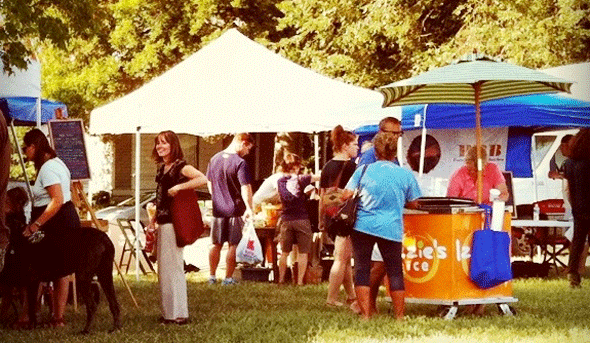
Wednesday afternoons at the farmers market are always a feast for the senses. There is live music coming from the gifted musicians who offer to play in the center of the park.  The colorful tents compete with the brilliant hues of fresh produce and artisinal goods that catch the eye from every direction.   Among the smells of handmade bars of soap and fresh cut herbs, there is the aroma of grilling that wafts its way around the square, beckoning the hot, the tired, and the hungry to get a good, healthy bite while they are there.

You may have walked by that booth, the one with the curious, engaging logo that is part heart, part beehive.  What is it all about?  What can this mean when you encounter the delicious food, the artful presentation, and the general good vibrations? 

Meet the BEhive.  It’s a band, it’s a creative collective, and it’s a force for good in Music City.  You may have seen ads for their benefit buffets at The Wild Cow.  (You haven’t been to the Wild Cow yet?  Why not?)  You have walked past their table, paused because, yes, that grill is tempting and then walked on.  To that, I say, quit being a baby and go get you some very good and good for you dinner.  You’ll spend a lot less than you’d spend for the fake fast food-like stuff they sell on Gallatin Road and your tastebuds and metabolism will thank you.

So, you're going to follow your nose and pretty soon your tastebuds are going to be convinced...but how did this come about?  We talked to Benjamin, one of the founding fathers of the BEhive:


Well, it all started with a band, Born Empty, who all lived in the same house appropriately called The BE Hive. We were a group of dudes that could express ourselves in any way we liked, and as long as the message and approach was positive, nothing else mattered. Every couple months we held vegan potlucks at our house, The BE Hive. These potlucks were amazing with upwards of 70 people at times, a bonfire, and a kitchen overflowing with vegetarian dishes people had prepared and brought over. We eventually moved out of the house, held a couple potluck fundraisers at The Wild Cow, and then came up with the idea for this buffet and business model.
But BE is more than a band; it's a way of life. The BE Hive is about taking care of yourself, and doing what is right for you. We try to inflict the least amount of negative impact on people and the world around us, while positively influencing those who care to take notice and are open to different ideas. There are a lot of things that are wrong and misguided within our society, but the bottom line is you can't change anyone. People have to want change, and then control their actions towards doing so. This is why we lead by example, and just BE.

Uh.  Wait a minute.  Did he say...vegan?   As in... no meat, no dairy, no... as in VEGAN?

And I said to quit being a baby.

Here's what Benjamin had to say about omnivores and reluctant others who think it's all sprouts and bare, cold blocks of tofu:  

 Ha! I'd say don't tell them it's vegetarian! But I usually tell them that they just need to try the right things. Then I guarantee/challenge them that if they came to the buffet or let me cook for them, I could fill them up beyond their wildest dreams. A lot people associate vegetarian dishes with only salads,  tofu, and weird and pushy vegetarians ready to jump down their backs for eating meat. There are several alternatives to all those things, and with the right protein and side choices, you can fill up most anyone and have them be completely satisfied.
Anyway, Nashvillians are getting smarter about the ways they feed themselves not only in terms of what happens on the inside, but how it effects everything on an environmental and economic level.
 I'm seeing a big farm to table push recently among restaurants. I think one of the things that led me to being so strict and curious about my diet was they way people ate and lived their lives. Seeing this push makes me hopeful that more people are being conscious of the crap they are putting in their bodies (not limited to meat, but also vegetarian items), and push the local organic farming scene while keeping people away from genetically modified and over processed foods
You know, or will know the food is good and they are green to the marrow, but more important than that is what is at the heart of the BEhive: the creative spirit that fosters commuity and the causes they support.


The Collective part of The BE Hive involves the customer, host restaurant. farms, community, the organizations who support the community, and the Hive itself. The gifts people bring are themselves. The customer brings their money, eats healthy food, and walks away feeling nourished and good knowing that some of their money is going towards bettering their community in some way. The host restaurant is associated with a fundraiser, continues to have a day off, gets free advertising, and also walks with some extra money. The community is supported by the non profits that are being benefited. The farm gets the extra business and exposure, and the Hive gets to help people, be creative, build their business and menu, and also profit a little.    
We try to support local organizations with green and sustainable motives.  We like to support the bike community, famers, the arts, kids, and whatever else makes a difference. My favorite organization that we have benefited so far has been the Glencliff Garden Project. They teach high schoolers how to start and maintain gardens while also introducing them to the world of plant based whole foods instead of the more processed food items which are more easily available to the majority of kids in this nation.
So what's ahead for The BEhive?  Tomorrow they are participating in a benefit ride for Bejamin Waldman and on the 14th, they will resume their buffets at The Wild Cow, with an Indian menu benefiting Good Food For Good People.
We plan to continue the buffet and the farmers market, and hopefully add a location or two. We want to have several fundraiser events a month in different spots around Nashville and continue to use other peoples empty kitchens while building our menu and developing our catering abilities. We have some things up our sleeve, but nothing is definite yet. We plan to expand though, and I promise it will be done in a very different way then you've seen before.
Being a force for good can be as life changing as creating a business that does so much for so many.  It can also be as simple as changing the way you do a few things at home. ENFM blog asked Benjamin what three things he would like to see people do to make Nashville a greener place:
I'd like to see Nashville become a more bicycle friendly place, riders and drivers both included. The recycling in this town SUCKS, and I feel that needs to be overhauled. And I wish all public places would be smoke free. Nashville is behind the times with all of these things, and I think its about time we wake up.
To learn more about The BEhive, visit their website at www.BEthehive.com
and follow them on Twitter and Facebook for up to the minute news on what the guys are up to.


Wednesday, August 1, 2012

Flying S Farms: Ten Years of Deep Roots and Strong Values

by Jas Faulkner 

"This is our way of life, it is not a hobby but a living. We love what we do, it is hard work but at the end of the day we know we are providing the best we can grow and helping others learn what real food tastes like and where it comes from, locally!" 
                        -Catherine Simmons,  Flying S Farms


One of the benefits of getting your produce from a true farmers market is that you are buying it  from the people who actually grew what you see on the tables. A visit to each individual vendor can and often does reveal the personalities behind the people who create the places that produce what feeds you. In a way, it's a chance to get a feel for those farms.  Okay, it's not absolutely like being there, but it can be the next best thing. 


The Flying S Farms' retail space at ENFM brings to mind the green, sunny expanses of Cannon County, Tennessee.  It is a treat for the senses. In spite of this summer's challenging weather, everything looks lush and vibrant.  There is the smell of fresh produce, sometimes accompanied by a tantalizing whiff of items from their kitchen.

You will also encounter Catherine and Ben Simmons, the owners and operators of Flying S Farms and Baking Farmer.com.   The Simmons are not only part of that elite subset of farmers who work on sustainable terms with their environment, they act as approachable ambassadors to anyone who is not quite sure why it is so important to support local agriculture.  


Their sense of community and a natural instinct towards education informs much of what they do.   In fact, it was an observation made by a child Mrs. Simmons encountered in a grocery store that inspired her decision to add prepared foods to their products:

"Baking Farmer came about when I was shopping at one of our local grocery stores and during checkout a young child pointed at me and said "Look mommie, there is that farmer lady and she bakes too!" They had been to our local farmers market and shopped at our booth and I guess through the eyes of a child she ?described me; a 'baking farmer'."
Simmons attests doing all of this can put her in the position of educating people about what that farm has to offer:
"You can not just place your produce on a table and say here it is, you've got to promote it. You need to learn what the produce taste like, how to use it, how to store it and where it comes from. People are so far removed from the farm anymore, they don't know what it takes to produce it or how to use it. We are amazed how many people do not know that green beans do not grow cut up!"
Even with the odd customer who thinks their green beans sprout from the ground already French cut, it is encouraging to see the increase in return customers and the growing awareness of the nature of food production and how it directly affects everyone involved in the process.  The Simmons credit the current market manager (Amy Delvin of Delvin Farms) with much of the market's success.

Even though Flying S Farms is a relative newcomer, having started operations in 2002, the Simmons have strong emotional ties to where they work and live.  Catherine Simmons recounts the history of the farm:

"Ben has always been involved in some form of Agriculture since a young child in Arkansas and Mississippi and through the years has worked with John Deere and with row crop farmers in Tennessee in various ways. My background came from parents of the Depression, we always had a garden in our backyard in Arizona. I recall my dad giving me some yellow banana squash seeds to plant in my very own 5x5 plot, we went on vacation for couple weeks and returning home my squash plants had taken over our backyard! He told me I was a born gardener and I had a green thumb because he never dreamed the seeds would even grow. I was hooked. In 2002 Flying S Farms began when Ben and I moved to the farm to care for my mother after the passing of my father. We met a family that market farmed and they encouraged us to make our kitchen garden larger and sell the excess at local farmers markets. We started very small with about 1/4 acre over a couple years making a few more plots I called Ben and told him Flying S Farms was growing, when he got home that evening I had tilled up the rest of the field with drive around plots, there was now 2 acres of growing room. Flying S Farms is still growing on acreage that we lease locally."
The name of the farm is also steeped in family history:
"As a young man, Ben designed a brand for their family farming business, his father was a pilot in WW2 and Ben followed in his dad's love of flying and he used the Army Aircorp Wings as inspiration for their brand."
Fans of "The S" state that the hearts, hands and minds that drive the farm can be seen in the quality of what appears on their tables.  Most of what goes in to the prepared foods they offer from their licensed commercial kitchen is either directly from their fields or provided by local farmers.  Customers can also be confident that the same care goes into their produce.


"We use natural and organic methods of growing our produce, the produce is getting their nutrients from the soil, not from commercial fertilizers. We sow covercrops in the early fall in various locations of our field to turn under in the spring providing the soil with green manure. During the growing season, we cultivate any weeds and grasses that grow between rows back into the soil. All our plants are either direct sown or started from seed in our greenhouse. We grow mostly heirloom type produce, the real thing and the real taste! As for day to day work, that is exactly it, work!"
Want to know more?  Visit Flying S Farms at East Nashville Farmers Market and on the internet at:  

Wednesday, July 11, 2012

Nashville Foodscapes: A Gentle Approach to Revolutionary Change

 by Jas Faulkner


"I am most proud that more hands are getting dirty, and that more mouths are eating local."
                    -Jeremy Lekich, Nashville Foodscapes


Like many Green visionaries, Jeremy Lekich has a lot of faith in the people he hopes to reach.  Souls on such a mission are often presumed to be impatient, wanting to see big changes sooner rather than later.  Lekitch has taken the time to understand his chosen audience. To him, the pace that Middle Tennesseans take when it comes to change seems about right.  


"Nashville people take their time with it. The Southeast is behind most other areas of the U.S. in terms of moving towards "green" living. I do not believe this is bad or good. It just means we are taking the time to do it well."


Lekich is one of the minds behind Nashville Foodscapes.  He wants to see more people filling  their souls, tables, and pantries by gardening.  Many prospective farmers find anything beyond a planter full of patio tomatoes daunting. Lekich recognizes this.  In fact, he maintains that the perception that you have to know everything from the beginning is one of the more common objections Nashvillians raise when the subject of permaculture gardening comes up. 


"I believe the biggest challenge for people is to not become overwhelmed by all there is to learn. The knowledge base for living a life of good stewardship is wonderfully huge and can be intimidating. But you start with what you are interested in and move from there. Overall, this type of living creates a life with no boring or dull moments...there is always more to learn." said Lekich.


What is permaculture gardening and how does it differ from the Victory Gardens of the previous century and the sustainable household gardens that are touted as the next big thing in the slow food movement?  Permaculture gardening is a far more interdisciplinary approach.  Instead of clear demarcations that separate the form and function of space, the landscaping flows between plants that are designed to maintain the health of the soil, plants that are meant to beautify where we live and plants that are intended to produce food for the household.  Some plants might meet one of those needs while others do double and triple duty.  The goal is to create a synergistic environment that feeds the body, mind, and soul.  


For Lekich, this means thinking beyond the basics of sustainability:  "To be honest, I am not a proponent of the "sustainability movement". We need to move beyond sustainability. Sustainability asks that resources are not depleted and that we put in as much as we take out. Our resources are depleted... and polluted. We need to detoxify our resources and put in more then we take out. That is regeneration. Lets become the regeneration movement."


The spark, or rather the seed for Lekich's ideas began to germinate while he was still in school: "The main inspiration for Nashville Foodscapes comes from a Permaculture garden I worked on at Warren Wilson College. Beauty and food weave together so gracefully in that garden and the abundance and variety of foods is awesome.  It was a long dance with that Permaculture garden that eventually manifested into Nashville Foodscapes


It was the best preparation I had. I came into contact with a myriad collection of fruit trees and shrubs, fruiting vines and canes, vegetable, herbs, and more. I learned how to grow these plants, give care for the plants, propagate these plants, and eat these plants. From there, I have expanded my knowledge by reading, talking with others, and exploring the areas around me. "


To learn more about permaculture gardening, visit Nashville Foodscapes at East Nashville Farmers Market.  You can also contact Jeremy and his team by visiting his website: http://nashvillefoodscapes.com/


Tuesday, May 22, 2012

Viva la NashVitality, Y'all!


As far as many members of the East Nashville Farmers Market faithful are concerned, every Wednesday at three-thirty is a time that is spoken for and will be until late Fall.  Upon entering the circle of vendors' booths, people wander, socialize, and exchange tips on cooking and admiring comments about the various dogs and babies that accompany nearly everyone on the premises.  It's a market.  It's also an established component of the culture of East Nashville and a vital part of the growing sustainability movement. 

Wait a minute.  Buying a chess pie or the world's tastiest kale is part of a movement?  Goat's milk soap is revolutionary?  Yes.  The Metro Public Health Department and Nashville Mayor Karl Dean want you (yes, you over there, we see you hiding that Moon Pie) to live a healthier lifestyle. Here's what Mayor Dean had to say about the subject:  

 “Fresh fruits and vegetables are essential to a healthy lifestyle, and Nashville is fortunate to have many local farmers and farmers markets to provide these natural and nutritious foods to our community. The East Nashville Farmers Market is an example of the many markets that are important for shaping and sustaining a healthier Nashville.”

So this, uh, thing? This big green revolution...  How is it different from any other city's efforts to make everyone hug a tree and eat an egg from a happy chicken with friends and lots of sunshine?  The thing is called NashVitality; and what sets it apart is the focus on creating and promoting opportunities for positive change at a communal level, 

When most city leaders decide to go green, they start with architectural revamping and large scale infrastructure conversions that are expensive, flashy and create a lot of media noise. The result is often pretty and it does offer a degree of benefit in terms positive environmental impact.  Those big measures are brave.  They merit the attention and serious evaluation they garner by those who want to develop more sustainable urban spaces in their own towns.  However, when the human scale of civic change is not a central part of the picture, adoption of more immediate, localized measures can be abbreviated.

This is especially true when it comes to winning the hearts and minds of a citizenry who wants to see a greener, cleaner, healthier city, but is also devoting a large portion of its time and resources to taking care of individual and family concerns.  When the scale moves beyond individual reach, when the time frame for viability stretches too far into the future, it is easy for many people, no matter how fervently they believe in the ideals driving the changes, to check out, leaving completion in the hands of future generations. What sustainability activists sometimes overlook is the need for smaller, attainable goals, measures that give everyone a taste of (and for) a future that is less taxing on the environment and each other.  

Marne Duke, manager of the NashVitality campaign, sees the solution as somewhere in between the grander Tomorrowland of acres of solar arrays and a car running on fuel courtesy of a household Mr. Fusion in every garage.  According to Ms. Duke.

" The campaign is really about creating opportunities where we live, work, learn, worship and play to live healthier lives. We try to focus on places and opportunities, rather than individual actions. We’ve found it’s less overwhelming for folks trying to make lifestyle changes to feel a part of a larger movement and supported in all the places they visit" 

The opportunities NashVitality promotes are plentiful and diverse.  The initiative's website serves as a green information nerve center where Metro Davidson County residents can find information about everything from events that promote a healthier lifestyle by getting active to workshops on improving life at the office to the best places to buy that perfect tomato or learn to grow one of your own. 

According to Ms Duke, the program was created by the Metro Public Heath Department in collaboration with the Mayor's Office and a collection of community movers and shakers.  The MHPD funded the creation of the NashVitality brand through a grant called Communities Putting Prevention to Work that was initially awarded to the city by the Department of Health and Human Services as a part of the Recovery and Reinvestment Act of 2009. 

The result was an unprecedented outreach effort that announced the existence of the new program in the various weekly papers, on billboards, buses, and benches all over Nashville.   The campaign included images of people from all walks of like engaged in activities associated with the lifestyle that would become the benchmark for NashVitality's goals.  The success of the program is borne out in the pictures that followed the initial unveiling of the program.  The idealized vision of a healthier Nashville is getting closer to reality every day thanks to NashVitality.  

So the next time you bite into a local strawberry or pass up processed corn meal for open-pollinated meal that was grown and ground in Middle Tennessee, keep in mind that you are committing a revolutionary act.

Viva la NashVitality, y'all! 


Tuesday, May 15, 2012

Slocal: Yes, It's Local and So Much More


by Jas Faulkner 

The Slow Food Movement might be new to you, but it has been around since the late eighties, first as a grassroots effort to move away from the increasing presence of fast food in the diets of working Italians and eventually in the US, where prominent localtarian proponents such as Michael Pollan and Alice Waters took up the cause of promoting a way of eating that was smarter and gentler on us and the planet.  

Slow Food promotes the idea that local, sustainably grown and homemade are always the best choices.  If Nashville Master Gardeners Jami Anderson and Russell Kirchner have their way, it could be the approach we all take towards filling our plates and pantries.

Educating themselves about the true nature of mainstream corporate food production in this country inspired them to start producing their own food five years ago.  As they learned how much of the value of real food is lost in the process, they began see the importance of local food production.

"Learning from many illuminating documentaries about the food industry (and reading enormous amounts about it as well) reinforced our desire to grow healthy fruits and vegetables that are pesticide-free, fresh, and have as much of their full complement of original nutrients as possible. Likewise, learning about the triggers of a fast-food diet to obesity, diabetes, and heart disease piqued our dedication to the slow-food movement. The continuing depletion of fossil fuels and air quality due to the transportation of food from far-off places to the table made us even more aware of the importance of growing food that is local."

This was also the inspiration for the name and mission of their company. Slocal Foods is more than just a pretty herb stand situated among the vendors at the East Nashville Farmers Market.  Of course you can get basil that will make your kitchen (not to mention your pesto,) smell like a little bit of culinary Nirvana and move on to the rest of your visit. Before you do, take a few minutes and look around.  You'll see herbs you might not recognize.  You'll see plants that, if you let them, will help turn your home into a greener and maybe tastier sanctuary. All that from a fresh sprig or a live plant?  Really?  

For you salt and pepper cooks, Anderson will attest that expanding your taste vocabulary can be daunting. 

 "...cooking with herbs can be intimidating to people who aren't chefs and may not have even heard of some of them. That's why we offer free recipes with the purchase of any herb that uses that herb as a main ingredient, fresh, dried, or live at our Farmers Market booth."

Still need some convincing?  Take a look at one of the many recipes you'll find this season at Slocal:


 Rosemary Ginger Chicken

2 Tbsp chopped fresh rosemary
1 Tbsp chopped fresh parsley
1 Tbsp chopped fresh sage
1 Tbsp chopped fresh thyme
3 Tbsp minced garlic
1 Tbsp olive oil
1 tsp kosher salt
1 tsp ground red pepper
1 tsp chopped peeled fresh ginger
1 tsp grated lemon rind
2 Tbsp fresh lemon juice
4 chicken breast halves

Combine all ingredients well. Rub over chicken pieces. Let marinate for at least 2 hours or more. 
Place chicken pieces on the rack of a roasting pan coated with cooking spray. Add water to pan to a depth of ¼ inch. 
Bake at 425 degrees until done for 30 - 40 minutes, depending on the thickness of the pieces and whether they are bone-in or boneless.

Aside from their interesting history and the sensory delight herbs offer, Anderson went on to explain why she and Kirchner focused on herbs as part of their life work as teachers and activists for Slow Food: "Farmers markets are great resources for fruits and vegetables that are local but we noticed a gap in the supply of fresh herbs. You can buy some herbs at chain groceries but often they come in plastic (yuck) clamshells and sell for around $3 for just a few (often moldy) sprigs. Neither freshness nor quality is guaranteed in most instances. Selection is also limited to a few mainstream herbs as well. Our herbs are raised organically from seed in rich, composted soil right in our own backyard and we offer many herbs you won't find for sale in a store. (For our fresh-cut herb inventory, see below.)"

FRESH:
basils (sweet, lemon, lime) • borage • catnip • catmint • garlic chives • cilantro • dill • fennel • feverfew • lavender • lemon balm • lemon grass • marjoram • mints (chocolate, spearmint) • nasturtiums • oreganos (spicy, regular) • curly parsley • italian parsley • rosemary • sage • savory (summer, winter) • sorrel • stevia • tarragon • thyme 

DRIED:

catnip • dill • fennel • lavender • lemon balm • oregano • rosemary • sage • thyme
PLANTS:
aloe vera • catnip • cilantro • dill • fennel • mint • oregano • peppers • purple heart • pumpkin • rosemary • sage • thyme • tomatoes • mixed pots (4-5 herbs apiece)
With that, I'll leave you with the details:
You can find Slocal Foods at the east Nashville Farmers Market on Wednesdays. See what we are offering each week athttp://slocalfoods.com. Call Slocal at 615-480-5347 for restaurant herb supply accounts.
and give Jami the final word:
"We are all about fresh, organically grown herbs raised with love and a little help from our chickens."  
                                                                                                                               -Jami Anderson

Saturday, May 12, 2012

Blue Skies and Seafood Pies on Opening Day

by Jas Faulkner 

Neither flood nor heat nor a horde of mighty cicadas could derail the previous opening days at the market. So what was in store for anyone coming to this year's opening day?  Sunshine, mild temperatures, and a stately armada of white clouds that set a course across the cerulean blue afternoon sky, all of which provided a backdrop for a lively, lovely time for everyone involved.

For anyone familiar with East Nashville Farmers Market, it was like a mashup of everything there is to love about this little corner of organic heaven that appears every Wednesday afternoon from now until October.  People milled about and chatted while looking at the vendors' tables.  Families spread blankets on the green expanse in the middle of the park, listening to the live music as their children danced and played.  True to the saying that East Nashville is the kind of place where everyone knows your dog's name, there were plenty of four-legged friends and their staff, noses and ears engaged as they made what would be the first of many rounds to check out tables, other dogs and the occasional curious child.

Jennifer Starks, who is here for a fifth year as a rep for her family's company, Kenny's Farmhouse Cheese, was ebullient when describing her feelings about the market's opening:
"I love this neighborhood! There are so many kids. There's kids and strollers and dogs and everybody looks forward to this.  On Wednesdays it's this awesome community gathering. I gush about it all the time.  I just love it.  I'm looking at all these kids and I'm seeing how they've grown over the years since I saw them in October.  There are mamas who have new babies. It just makes for a lively atmosphere. It's just so cool.  Regular customers tell me they have waited all winter for us."
Among the familiar sights and sounds and favorite vendors were some new people waiting to be discovered by Nashville's savviest green consumers.  Michael "Doc" Braden was all smiles as curious visitors stopped by to get a better look at his seafood pies.  Across the park, Ric Ousley of Ousley Ouch Foods used almost nonstop comic banter to entice people to try the salsa he developed with his wife. SloCal's herbs made their own statement, offering a  fresh, beautiful, and delightfully fragrant alternative to your mama's Durkee packets.

These new faces will become part of something that, as many have mentioned is a tradition that is continually evolving. Amy Delvin of Delvin Farms is  the director of the market sees the continual growth and refinement of the character of the market as her mission.  she has worked with the market since its beginnings at the original site next to The Turnip Truck. So what was her take on Opening Day 2012?
"We had a big kick-off   This is a bit bigger this year because everyone is excited now that the market is back.  We can eat locally again . You can pick up anything you need for your dinner: your milk, bread, vegetables, cheese and meat. It's all here along with plants and beautiful handmade items." 
When invited the media to cover the event, she was pleasantly surprised to find they were receptive to giving the market coverage.  "I sent out press releases and we have seen Channels 4, 5, and 17 out here.  Fox did a great piece on ENFM this morning, so the word is getting out."

This sort of publicity helps the market reach a wider audience and spread the message that good, local food is not only better, it is better for everyone.  What's next?
I would like to see this market be certified organic.  We're giving vendors an incentive to go organic with a ten percent discount on their fees if they become certified.  A lot of people who shop the market assume that everything is organic and we do have some conventional farmers here.  You need to talk to your farmer and learn how your food is grown. 
If you were there, welcome (back!).  If you haven't dropped by just yet, you should.  For three hours every Wednesday, it's the freshest, greenest spot in Nashville.

NEXT WEEK:  Q and A with the good people who run SloCal.  Time to get all herbal, man!

 (Authors note: Sincere thanks to everyone who agreed to be interviewed.  There were some problems with the audio files and unfortunately not all of them could be saved.  From here on out I will be working with a different program that records directly to my computer.  Once again, thanks and if your quote didn't make it into the article, it wasn't because your thoughts were not appreciated.)