Showing posts with label nashville. Show all posts

Wednesday, May 8, 2013

Stuff's Gettin' Real...

by Jas Faulkner

Hi!  My name is Jas Faulkner and this is my second season writing for the ENFM blog. Like many of you, I am continually learning ways to live a cleaner, greener life. Over the next six months we'll explore what the market has to offer.  We'll also look at the history and culture behind farmers' markets, local foodways, and   other aspects of the production and the politics of food in North America.  But first, I need to talk to you about something very important.

 Consider this a call to farms.  

In the past you may have decided to support your local farmers' market based on some abstract principle. You may have done it because it was an emotional callback to a time when nearly every family had someone who lived on a working farm.  You may remember the sweet smell of warm produce picked earlier that day and then lovingly prepared as family shared stories of the past and planned for the future.

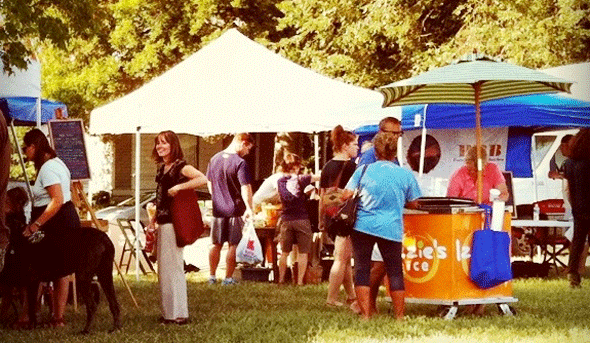
You may have made a weekly trek to The East Nashville Farmer's Market because it's a fun thing to do.  It's a way to meet some nice people who are passionate about growing safe, nutritious food for your community.  Your friends and neighbors are there.  It's a lovely, bucolic space in the heart of the city where children dance to live music and artisans and their families share everything from cheese to salsa to pie to hummus.

If someone asked you why you visit The ENFM, you might have some vaguely pleasant answers about how it makes you feel good. And that's a good thing. You know?  Given the choice, I support local producers and merchants for nearly everything I use in my kitchen and elsewhere. I do a price and availability check at The Turnip Truck and Center of Symmetry first and now that market season is upon us, ::deep breath:: I have another local place to look for what I need (or sometimes just want.)

Here's the thing, and it's kind of a big thing, er, deal:  Stuff's gettin' real.  We can't take for granted that these sources will be around if we don't support them. If you care about preserving Tennessee's agrarian heritage, if you care about what goes into your pantry, if you want to keep something that has become a vital part of community life, you'll understand why it is important to support The East Nashville Farmers' Market.

It only happens on Wednesdays at those magic hours from 3:30 to 6:30 at 10th and Russell. Come on down and meet your farmer!




Monday, October 8, 2012

Fall Fest: Wednesday! Wednesday! Wednesday! Come Touch a Tractor!


By Jas Faulkner 


Looking for a cheep thrill this Wednesday?  Why not take your offspring to pet a chicken or touch a tractor at East Nashville Farmers Market?

Now in its sixth year, the ENFM Fall Fest is a great way to see what fresh fare is available from the vendors and spend some low-tech, no-pressure time getting your little rock-and-rollers to consider taking a walk on the country side. 

 According to event coordinator and market director Amy Delvin Tavalin, the event, which started out as a part of the much smaller market in the parking lot of The Turnip Truck, had seven vendors, a bluegrass band and a petting zoo.  

"This is the 6th year of the Fall Fest, we've had one every year that the market has been open, but it gets bigger every year!"

With the foliage changing colors and the weather getting milder, this is the perfect time to come see what you've been missing if you have not yet made it to the magic at South Tenth Street every Wednesday afternoon.  Even if you don't have the excuse of a household small fry with a yen for some face time with a John Deere, there are plenty of events and vendors to delight your senses and inspire your inner Emeril. 

Aside form the kid-oriented events: the petting zoo, touch-a-tractor, and pumpkin- and punkin, er, face painting; each vendor is going to decorate their stand, so you might just pick up some ideas for your own fall decor from our talented crowd of farmers and artisans.  Michael Martin of Whole Foods will be on hand with a chef demonstration that is sure to please the pickiest eater. 

Many newcomers to local fare might not realize how much is available in the the fall. While the choices differ from the summer months, there is still a diversity of good for you and good to eat produce to look forward to trying.    According to Amy Delvin Tavalin, "vegetables will be changing in the remaining weeks- cooler weather brings back the leafy greens along with winter squash, pumpkins,sweet potatoes, broccoli, cauliflower, radish, turnips,  and beets.Some vendors will have fall herbs, flowers, and seasonal desserts as well! 

For Tavalin, the idea of celebrating Autumn in East Nashville is an easy choice:

There's something about the changing of the seasons that inspires community. We're hoping to have the East Nashville community out to help us celebrate Fall and the changes that it brings. Pumpkins, gourds, leafy greens, winter squashes, sweet potatoes, cabbage, broccoli, cauliflower will be making their way in, and that nip in the air that October brings will invite folks to try hot cider, coffee and pie. 

Do you really want to miss this?  That's what I thought. Come out, sample some good stuff and bring more healthy goodies home.  You'll be glad you did! 


Wednesday, October 3, 2012

Hog Killing Time

by Jas Faulkner 

Reminder: Next week the ENFM will feature their annual Fall Festival!  Check here on Monday, October 7th for more information.


Readers outside of the Nashville area probably picture my hometown as a more of an overgrown small town than the cosmopolitan metropolis that it really is.  Like many entertainment industry hubs, the best way to describe the population of Nashville is: "nearly everybody here is from someplace else."  

This demographic shift has contributed to some big changes in Music City's culinary diversity.  Are you a displaced New Yorker looking for a taste of home? There's a restaurant near Vanderbilt called Noshville that offers deli food Big Apple Style. Nolensville Road is a culinary UN, with establishments representing the foodways of nearly every continent. No matter where a Nashvillian may hail from, there is something here that will give them a touch of "back home."   My home city's culinary profile is not just about bringing everything from there to here. Nashville Originals is an organization devoted to promoting local restaurants whose chefs work at the edge of the continually evolving definition of Nashville cuisine.

Another aspect of this change can be found in our recognition of the holiday calendar in terms of the accepted wisdom of when and to a much lesser degree what is eaten at certain times of the year. The ways in which Middle Tennesseans eat, especially during the winter holidays, is getting less distinguishable from the rest of the country. What many transplants don't realize is that divergent regional traditions in the holiday bill of fare were still the norm less than a century ago.

Thanksgiving is a classic example of the way regional differences can affect what's on the menu.  The Thanksgiving pictured by Norman Rockwell is a version that has its roots in the Northeast.  While the custom of having roast turkey, dressing and cranberries is pretty common across the US now, in the first half of the Twentieth Century, Thanksgiving was considerably different for many Tennesseans, especially those who still lived in rural areas.

The cooler weather meant that many families were devoting the time off from school and work to prepare for the winter months. The last of the produce was canned, frozen, and stored in cellars and the next step, slaughtering and parceling the meat usually occurred in November.  Often referred to as "hog killing time," the long Thanksgiving weekend usually entailed families gathering to slaughter livestock and then butcher the carcass.

This was, well, actually it is a communal process.  Once the animal is killed and the meat is cut, much of it is either sent into a deep freeze or a smokehouse.  Meals center around this activity and the recreational/subsistence hunting that takes place once the livestock chores are completed.  If there is deer or turkey meat to be prepared, a similar process ensues.

Because of this, many families might enjoy a pork roast and vegetables for Thanksgiving dinner (midday) or supper that evening.  The next day, the traditional breakfast would consist of tenderloin and biscuits, gravy, grits, fried potatoes and eggs. Tabletop condiments for breakfast usually included molasses, apple butter, butter, and home canned or frozen fruit.  For the rest of the weekend, there might be a cookout, but for the most part, meals were made from leftovers.

Did those 20th Century Tennesseans ever feel their holiday was lacking?  Not really.  It was a time for fun, telling family stories and yes, giving thanks.  According to one person who remembers those Autumn days fondly:

"But then we always did that, give thanks.  Getting up in the morning is as much a reason for knowing there  would be food on the table and a roof over our heads.  We were always thankful for both every day!"


Tuesday, August 21, 2012

Dryland Fish and Other Dixie Delights

by Jas Faulkner

So you've been here for a while and can say the local food is your thing.  Honestly, why shouldn't it be?  Aside from great eateries like The Wild Cow and Tayst and Fat Juicy Taco and Cafe Coco and the to-go selections at The Turnip Truck and a thousand other places in Nashville ready to let loose some delightful fireworks on your taste buds; there is the rich variety of locally produced food just waiting to turn your kitchen into a culinary salon.

You're an expert.  After all, you can tell hot chicken from fried and a Goo Goo Cluster from a Colt's Bolt.

Do you know where to get dryland fish?  What is dock and can you add it to Spring mix?  Is poke sallet for real?

Poke Sallet
You've probably seen poke sallet  (or pokeweed, as it is sometimes known) growing in less tended corners of lots and alleys in Nashville.  It is large, with deep red or magenta stalks and  flat, oval leaves.  As it matures, it produces dark berries that are considered a treat by the local bird population.  The best time to harvest poke is when there are small, tender leaves growing from very fine green stalks.  Many people prefer to suate' poke with olive oil and onions or bacon if they're omnivores. It is traditionally stirred into scrambled eggs.

Do people still eat poke? Absolutely! Best to be smart and safe about it, though.  Either allow a plant or two to grow in your own backyard or find someone who doesn't use harsh chemicals that could leach into those little leaves and make you sick.

What's Up, Dock?
There are a handful of variations of dock growing around Middle Tennessee.  The kind that many native Tennesseans' ancestors ate was called yellow or curly dock.  While it does have some nutritional benefits, and is plentiful in this region, new weed hunters should exercise caution when selecting  and preparing plants. Check out a class with a reputable teacher before you try this (or any kind of wild weed hunting).   The best place in Nashville is practically in your back door if you live in East Nasty.  Shelby Bottoms Nature Center offers classes for all ages and interests.

For more information, visit their website: http://www.nashville.gov/parks/nature/sbnc/index.asp

You Get The Line and I'll Get The Pole and...No?
Nope.  Dryland fish is a name given to one of the most jealously guarded wild food items in North America.  When the water tables were low and creeks and streams had dwindled to a trickle, families would often head out to the nearest wooded area to search for fleshy, tender morel mushrooms.  Inthe kitchen, the morels were  quartered lengthwise, dipped in a beaten egg, dredged in flour and cornmeal and pan fried.  The taste and mouthfeel was thought to be a good substitute for freshwater fish.   Morels were also used as an ingredient in stuffing for game animals and a meat extender before they were hunted into near extinction in some parts of the country.

All of this antique eating sounds great, doesn't it?  It also sounds like a real adventure.  If you're a little short on time to Indiana Jones it for supper, drop by the Market.  You might not find Great-Grandma's Curly Dock, but you will find a selection of locally produced food sold by the people who grew and raised it.  You can't get more authentically Tennessean than that.

Next week:  Jami from Slocal returns to talk about fall herbs, pickles and why hubby Russell is going to kick butt at the State Fair.  Don't miss it!


Wednesday, August 1, 2012

Flying S Farms: Ten Years of Deep Roots and Strong Values

by Jas Faulkner 

"This is our way of life, it is not a hobby but a living. We love what we do, it is hard work but at the end of the day we know we are providing the best we can grow and helping others learn what real food tastes like and where it comes from, locally!" 
                        -Catherine Simmons,  Flying S Farms


One of the benefits of getting your produce from a true farmers market is that you are buying it  from the people who actually grew what you see on the tables. A visit to each individual vendor can and often does reveal the personalities behind the people who create the places that produce what feeds you. In a way, it's a chance to get a feel for those farms.  Okay, it's not absolutely like being there, but it can be the next best thing. 


The Flying S Farms' retail space at ENFM brings to mind the green, sunny expanses of Cannon County, Tennessee.  It is a treat for the senses. In spite of this summer's challenging weather, everything looks lush and vibrant.  There is the smell of fresh produce, sometimes accompanied by a tantalizing whiff of items from their kitchen.

You will also encounter Catherine and Ben Simmons, the owners and operators of Flying S Farms and Baking Farmer.com.   The Simmons are not only part of that elite subset of farmers who work on sustainable terms with their environment, they act as approachable ambassadors to anyone who is not quite sure why it is so important to support local agriculture.  


Their sense of community and a natural instinct towards education informs much of what they do.   In fact, it was an observation made by a child Mrs. Simmons encountered in a grocery store that inspired her decision to add prepared foods to their products:

"Baking Farmer came about when I was shopping at one of our local grocery stores and during checkout a young child pointed at me and said "Look mommie, there is that farmer lady and she bakes too!" They had been to our local farmers market and shopped at our booth and I guess through the eyes of a child she ?described me; a 'baking farmer'."
Simmons attests doing all of this can put her in the position of educating people about what that farm has to offer:
"You can not just place your produce on a table and say here it is, you've got to promote it. You need to learn what the produce taste like, how to use it, how to store it and where it comes from. People are so far removed from the farm anymore, they don't know what it takes to produce it or how to use it. We are amazed how many people do not know that green beans do not grow cut up!"
Even with the odd customer who thinks their green beans sprout from the ground already French cut, it is encouraging to see the increase in return customers and the growing awareness of the nature of food production and how it directly affects everyone involved in the process.  The Simmons credit the current market manager (Amy Delvin of Delvin Farms) with much of the market's success.

Even though Flying S Farms is a relative newcomer, having started operations in 2002, the Simmons have strong emotional ties to where they work and live.  Catherine Simmons recounts the history of the farm:

"Ben has always been involved in some form of Agriculture since a young child in Arkansas and Mississippi and through the years has worked with John Deere and with row crop farmers in Tennessee in various ways. My background came from parents of the Depression, we always had a garden in our backyard in Arizona. I recall my dad giving me some yellow banana squash seeds to plant in my very own 5x5 plot, we went on vacation for couple weeks and returning home my squash plants had taken over our backyard! He told me I was a born gardener and I had a green thumb because he never dreamed the seeds would even grow. I was hooked. In 2002 Flying S Farms began when Ben and I moved to the farm to care for my mother after the passing of my father. We met a family that market farmed and they encouraged us to make our kitchen garden larger and sell the excess at local farmers markets. We started very small with about 1/4 acre over a couple years making a few more plots I called Ben and told him Flying S Farms was growing, when he got home that evening I had tilled up the rest of the field with drive around plots, there was now 2 acres of growing room. Flying S Farms is still growing on acreage that we lease locally."
The name of the farm is also steeped in family history:
"As a young man, Ben designed a brand for their family farming business, his father was a pilot in WW2 and Ben followed in his dad's love of flying and he used the Army Aircorp Wings as inspiration for their brand."
Fans of "The S" state that the hearts, hands and minds that drive the farm can be seen in the quality of what appears on their tables.  Most of what goes in to the prepared foods they offer from their licensed commercial kitchen is either directly from their fields or provided by local farmers.  Customers can also be confident that the same care goes into their produce.


"We use natural and organic methods of growing our produce, the produce is getting their nutrients from the soil, not from commercial fertilizers. We sow covercrops in the early fall in various locations of our field to turn under in the spring providing the soil with green manure. During the growing season, we cultivate any weeds and grasses that grow between rows back into the soil. All our plants are either direct sown or started from seed in our greenhouse. We grow mostly heirloom type produce, the real thing and the real taste! As for day to day work, that is exactly it, work!"
Want to know more?  Visit Flying S Farms at East Nashville Farmers Market and on the internet at:  

Wednesday, July 25, 2012

A Chick Chick Here and a Chick Chick There


by Jas Faulkner 

Here a chick!
There a chick!
Everywhere a chick chick! 

Depending on who you ask, chickens can be cute and fluffy or big and scary or bug-eating fertilizing phenoms or good friends with egg benefits. For people who have never spent much time around them, they are bit of an enigma.  Their presence as part of Nashville's burgeoning localtarian culture has caused some of the more heated arguments in city council over the past few months.  So what is it about these complex, sensitive creatures that incites so much passionate debate?  ENFM sat down with Mary Self, a Middle Tennessee chicken enthusiast who is quickly turning into one of their most persuasive advocates.

According to Self, there are a number of things to take into consideration when deciding whether or not to keep chickens, not the least of which is location.  Some districts opted out of the current ordinance and others placed restrictions based on the amount of space you have available. 
Per Self:  According to the ordinance there must be a minimum of two square feet per hen provided for henhouses and six square feet per bird for fenced enclosures.
In an urban setting, following the ordinance, the chickens depend on the owner for fresh food and water and protection. No free ranging! I visit my girls 3 or 4 times a day for between 10-15 minutes each visit. I bring them fresh food and water in the morning, they get a few treats a day and then I check them at night to make sure they are tucked in and safe. 
No free ranging means you'll have to provide a coop for your little cluckers. There are retailers offering coops, pens and "chicken tractors" that range from budget friendly basic to palatial in scale and ornamentation.  Ms Self confirms that premade coops can get spendy.
 "Well, that is totally up to the person because some coops can cost hundreds or thousands of dollars, however we built our coop for $400."
The biggest expenses occur at the beginning.  The chickens seem to cost considerably less and and maintenance is reasonable:
"Our chicks cost $5 each and a 50 lb bag of convential feed costs about $20. A feeder and water bottle cost about $10 each. I have also had a few vet visits with my chickens so that adds up quickly. Over time, I don't think it will feel expensive because they are my pets and I love them."
So. You have the cute little house, the safe place for them to play and stuff for feeding and watering and...chickens.  Where do we get chickens?  Self says you can go the traditional route and buy them locally or shop online,   A quick look at hatchery (chickery?) websites reveal dozens of breeds of poultry.  Some are pretty, others are sleekly practical.   It all depends on why you want chickens. Metro ordinances will allow chickens for eggs only.  Self recommends Rhode Island Reds, Barred Rocks, Opringtons, Araucanas, and Marans.  

"I have two Buff Orpingtons, Thelma and Louise, who have been laying an egg almost every day since they turned 6 months old," she added. 

Is it worth it?  Ms Self says the happiness a feathered friend can bring into your life is contagious:
"Where should I start? I love it! I look forward to visiting them during the day. They each have a different personallity and they "talk" to me. Their eggs are delicious. The yolks are a beautiful shade of orange and taste creamy and fresh. I share eggs with my closest friends and some of my husband's co-workers. The girls are not messy and my neighbors love them. I have one neighbor who is currently building their own coop. It's a beneficial relationship, like dogs and cats, but my pets make my breakfast!"
and has inspired an ingenious business idea... 
 "I only worry when I go out of town because it is hard to find someone to care for them. I am actually thinking of starting a chicken sitting service to help others."
Does urban chicken keeping sound like it might be your cuppa?  Join Mary Self and other like-minded fans of our feathered friends at Urban Chicken Advocates of Nashville. UCAN Is a volunteer group that provides education and advocacy for people who wish to keep hens in Metro Nashville. Her hope is that the group can help keep the ordinance alive.  
"Our next meeting will be in September and anyone interested should sign up on our website www.ucannashville.org The ordinance has a sunset clause attached to it and in 18 months it will be up for more discussion and a final vote. If Nashvillains want to have the right to raise hens they really need to communicate with their council members and become a part of UCAN!"
For more information, visit UCAN online at www.ucannashville.org and be sure to say "Hi!" to Mary at ENFM, where she acts as an outreach educator for Nashville Foodscapes.


Wednesday, July 11, 2012

Nashville Foodscapes: A Gentle Approach to Revolutionary Change

 by Jas Faulkner


"I am most proud that more hands are getting dirty, and that more mouths are eating local."
                    -Jeremy Lekich, Nashville Foodscapes


Like many Green visionaries, Jeremy Lekich has a lot of faith in the people he hopes to reach.  Souls on such a mission are often presumed to be impatient, wanting to see big changes sooner rather than later.  Lekitch has taken the time to understand his chosen audience. To him, the pace that Middle Tennesseans take when it comes to change seems about right.  


"Nashville people take their time with it. The Southeast is behind most other areas of the U.S. in terms of moving towards "green" living. I do not believe this is bad or good. It just means we are taking the time to do it well."


Lekich is one of the minds behind Nashville Foodscapes.  He wants to see more people filling  their souls, tables, and pantries by gardening.  Many prospective farmers find anything beyond a planter full of patio tomatoes daunting. Lekich recognizes this.  In fact, he maintains that the perception that you have to know everything from the beginning is one of the more common objections Nashvillians raise when the subject of permaculture gardening comes up. 


"I believe the biggest challenge for people is to not become overwhelmed by all there is to learn. The knowledge base for living a life of good stewardship is wonderfully huge and can be intimidating. But you start with what you are interested in and move from there. Overall, this type of living creates a life with no boring or dull moments...there is always more to learn." said Lekich.


What is permaculture gardening and how does it differ from the Victory Gardens of the previous century and the sustainable household gardens that are touted as the next big thing in the slow food movement?  Permaculture gardening is a far more interdisciplinary approach.  Instead of clear demarcations that separate the form and function of space, the landscaping flows between plants that are designed to maintain the health of the soil, plants that are meant to beautify where we live and plants that are intended to produce food for the household.  Some plants might meet one of those needs while others do double and triple duty.  The goal is to create a synergistic environment that feeds the body, mind, and soul.  


For Lekich, this means thinking beyond the basics of sustainability:  "To be honest, I am not a proponent of the "sustainability movement". We need to move beyond sustainability. Sustainability asks that resources are not depleted and that we put in as much as we take out. Our resources are depleted... and polluted. We need to detoxify our resources and put in more then we take out. That is regeneration. Lets become the regeneration movement."


The spark, or rather the seed for Lekich's ideas began to germinate while he was still in school: "The main inspiration for Nashville Foodscapes comes from a Permaculture garden I worked on at Warren Wilson College. Beauty and food weave together so gracefully in that garden and the abundance and variety of foods is awesome.  It was a long dance with that Permaculture garden that eventually manifested into Nashville Foodscapes. 


It was the best preparation I had. I came into contact with a myriad collection of fruit trees and shrubs, fruiting vines and canes, vegetable, herbs, and more. I learned how to grow these plants, give care for the plants, propagate these plants, and eat these plants. From there, I have expanded my knowledge by reading, talking with others, and exploring the areas around me. "


To learn more about permaculture gardening, visit Nashville Foodscapes at East Nashville Farmers Market.  You can also contact Jeremy and his team by visiting his website: http://nashvillefoodscapes.com/


Tuesday, July 3, 2012

Thomas Jefferson, Green American

by Jas Faulkner

It may come as a surprise to many Americans that one of the most vocal proponents for the conservation of our farmlands and preservation of agrarianism as a way of life was also a founding father of this country. Thomas Jefferson may be remembered first and foremost as the primary author of the Declaration of Independence, but he considered himself to be a farmer by profession.  According to Jefferson, farming was the only truly pure and honest profession.  He reasoned that farmers had to maintain a relationship with the land that did not allow for the byzantine devices put in place that alienated people from what sustained them.  A false promise to the earth accomplished nothing, but hard work and devotion to stewardship of the land could keep a nation fed.  

In Jefferson's own words:
“Those who labour in the earth are the chosen people of God, if ever he had a chosen people, whose breasts he has made his peculiar deposit for substantial and genuine virtue. It is the focus in which he keeps alive that sacred fire, which otherwise might escape from the face of the earth.” 
                       - from "Notes on the State of Virginia 1781
 Today's organic farmers are looking to the wisdom of older techniques of farming, many of which were borrowed from indigenous people who had cultivated the land long generations before the arrival of the Europeans. Just like those contemporary farmers, Jefferson was very aware of the techniques that had been created by his predecessors.  Their watchful, mindful use of the earth was not lost on the statesman from Virginia, who observed and recorded the effects of everything he tried.


Thomas Jefferson's respect for his profession extended beyond merely practicing within the bounds of accepted vocational wisdom.  He experimented with the combinations of plants within the same plot, crop rotation, seed saving, soil amendment and fertilization, and even inventive ideas for tools.  Most important of all was Jefferson's endorsement of the concept that the land itself was as alive as the plants that grew on it and required just as much care.
 

On the eve of the 236th anniversary of the US declaration of independence, take a moment to remember the founding fathers, many of whom were farmers themselves.  They're the reason we can celebrate what we enjoy today.  Their lives should also serve as examples of how we should view the land we have been given.


Happy Independence Day! 
(and see y'all next week!)   


Jas Faulkner and everyone at The East Nashville Farmers Market


Tuesday, June 12, 2012

Labels and Fables: The Truth About Organic Certification

by Jas Faulkner 


One of the more difficult to navigate talking points when it comes to generating interest in buy and selling local products is the price.  Everyone wants to do the right thing, but there are few, if any consumers who don't balk the first time they see exactly how much they are going to pay for a bundle of kale or a pint of tomatoes.  No matter how pretty they are, no matter how good they taste, there is still the matter of the cost.

The matter can get even touchier when  vendors at some markets (who are more often than not resellers) claim that "organic certification is nothing but a label."  Some vendors and even some growers will go so far as to make claims that their produce is organic "in every way except by name."  The problem comes down to how the definition of organic could vary from grower to grower.    Even if one works with the idea that everyone is operating with the best of intentions, there is still too much guesswork involved and at this stage, with so much that is questionable being defined as potential food, it's also a bit risky.

Some people claim that the question, to be or not to be organic, comes down to paperwork and expense.  Looking at it from that perspective, it's easy to dismiss the protests that, in spite of the fact that there are fewer chemical or technological interventions going into organic crops, they are costlier to produce.  During an interview with Amy Delvin of Delvin Farms she discussed the process that farmers go through in order to get certified by the USDA.  Aside from the mountain of paperwork, farmers must keep meticulous records about the sources they use for their seeds and everything else they employ in the business of growing their crops. In addition to those formalities, each farmer is completely responsible for making arrangements for the required inspection by a USDA agent.  Doing so isn't as simple as paying a fee and waiting for someone to show up from the local agriculture extension office.  Farmers are on the hook for airfare, accommodations, a per diem for meals on top of the fees they have to pay for the inspection itself.  Once a farm passes the test, they are also required to pay a percentage back to the USDA National Organic Program.  The process of record-keeping and proof of compliance is unending.

At the same time, it has its rewards for both growers and their customers. For farmers, there is the satisfaction of having proof of the hard work that goes into creating organic crops.  For consumers there is the confidence that comes from knowing beyond a shadow of a doubt that the food you put on your table is safe .   How to tell if the person who grows your food is certified?  Look for the seal pictured above.  Ask questions. Rodale has some useful tips for finding out if a farmer is organic right here. The mission of ENFM is to create a place for you to get your food directly from the person who raised it.

That kind of relationship is actually kind of rare  in today's mercantile economy, and yet it occurs at  210 South 10th  Street over and over from 3:30 to 6:30 every Wednesday.  What are you doing this coming Wednesday?  Why not join us?

Tuesday, May 22, 2012

Viva la NashVitality, Y'all!


As far as many members of the East Nashville Farmers Market faithful are concerned, every Wednesday at three-thirty is a time that is spoken for and will be until late Fall.  Upon entering the circle of vendors' booths, people wander, socialize, and exchange tips on cooking and admiring comments about the various dogs and babies that accompany nearly everyone on the premises.  It's a market.  It's also an established component of the culture of East Nashville and a vital part of the growing sustainability movement. 

Wait a minute.  Buying a chess pie or the world's tastiest kale is part of a movement?  Goat's milk soap is revolutionary?  Yes.  The Metro Public Health Department and Nashville Mayor Karl Dean want you (yes, you over there, we see you hiding that Moon Pie) to live a healthier lifestyle. Here's what Mayor Dean had to say about the subject:  

 “Fresh fruits and vegetables are essential to a healthy lifestyle, and Nashville is fortunate to have many local farmers and farmers markets to provide these natural and nutritious foods to our community. The East Nashville Farmers Market is an example of the many markets that are important for shaping and sustaining a healthier Nashville.”

So this, uh, thing? This big green revolution...  How is it different from any other city's efforts to make everyone hug a tree and eat an egg from a happy chicken with friends and lots of sunshine?  The thing is called NashVitality; and what sets it apart is the focus on creating and promoting opportunities for positive change at a communal level, 

When most city leaders decide to go green, they start with architectural revamping and large scale infrastructure conversions that are expensive, flashy and create a lot of media noise. The result is often pretty and it does offer a degree of benefit in terms positive environmental impact.  Those big measures are brave.  They merit the attention and serious evaluation they garner by those who want to develop more sustainable urban spaces in their own towns.  However, when the human scale of civic change is not a central part of the picture, adoption of more immediate, localized measures can be abbreviated.

This is especially true when it comes to winning the hearts and minds of a citizenry who wants to see a greener, cleaner, healthier city, but is also devoting a large portion of its time and resources to taking care of individual and family concerns.  When the scale moves beyond individual reach, when the time frame for viability stretches too far into the future, it is easy for many people, no matter how fervently they believe in the ideals driving the changes, to check out, leaving completion in the hands of future generations. What sustainability activists sometimes overlook is the need for smaller, attainable goals, measures that give everyone a taste of (and for) a future that is less taxing on the environment and each other.  

Marne Duke, manager of the NashVitality campaign, sees the solution as somewhere in between the grander Tomorrowland of acres of solar arrays and a car running on fuel courtesy of a household Mr. Fusion in every garage.  According to Ms. Duke.

" The campaign is really about creating opportunities where we live, work, learn, worship and play to live healthier lives. We try to focus on places and opportunities, rather than individual actions. We’ve found it’s less overwhelming for folks trying to make lifestyle changes to feel a part of a larger movement and supported in all the places they visit" 

The opportunities NashVitality promotes are plentiful and diverse.  The initiative's website serves as a green information nerve center where Metro Davidson County residents can find information about everything from events that promote a healthier lifestyle by getting active to workshops on improving life at the office to the best places to buy that perfect tomato or learn to grow one of your own. 

According to Ms Duke, the program was created by the Metro Public Heath Department in collaboration with the Mayor's Office and a collection of community movers and shakers.  The MHPD funded the creation of the NashVitality brand through a grant called Communities Putting Prevention to Work that was initially awarded to the city by the Department of Health and Human Services as a part of the Recovery and Reinvestment Act of 2009. 

The result was an unprecedented outreach effort that announced the existence of the new program in the various weekly papers, on billboards, buses, and benches all over Nashville.   The campaign included images of people from all walks of like engaged in activities associated with the lifestyle that would become the benchmark for NashVitality's goals.  The success of the program is borne out in the pictures that followed the initial unveiling of the program.  The idealized vision of a healthier Nashville is getting closer to reality every day thanks to NashVitality.  

So the next time you bite into a local strawberry or pass up processed corn meal for open-pollinated meal that was grown and ground in Middle Tennessee, keep in mind that you are committing a revolutionary act.

Viva la NashVitality, y'all! 


Tuesday, May 15, 2012

Slocal: Yes, It's Local and So Much More


by Jas Faulkner 

The Slow Food Movement might be new to you, but it has been around since the late eighties, first as a grassroots effort to move away from the increasing presence of fast food in the diets of working Italians and eventually in the US, where prominent localtarian proponents such as Michael Pollan and Alice Waters took up the cause of promoting a way of eating that was smarter and gentler on us and the planet.  

Slow Food promotes the idea that local, sustainably grown and homemade are always the best choices.  If Nashville Master Gardeners Jami Anderson and Russell Kirchner have their way, it could be the approach we all take towards filling our plates and pantries.

Educating themselves about the true nature of mainstream corporate food production in this country inspired them to start producing their own food five years ago.  As they learned how much of the value of real food is lost in the process, they began see the importance of local food production.

"Learning from many illuminating documentaries about the food industry (and reading enormous amounts about it as well) reinforced our desire to grow healthy fruits and vegetables that are pesticide-free, fresh, and have as much of their full complement of original nutrients as possible. Likewise, learning about the triggers of a fast-food diet to obesity, diabetes, and heart disease piqued our dedication to the slow-food movement. The continuing depletion of fossil fuels and air quality due to the transportation of food from far-off places to the table made us even more aware of the importance of growing food that is local."

This was also the inspiration for the name and mission of their company. Slocal Foods is more than just a pretty herb stand situated among the vendors at the East Nashville Farmers Market.  Of course you can get basil that will make your kitchen (not to mention your pesto,) smell like a little bit of culinary Nirvana and move on to the rest of your visit. Before you do, take a few minutes and look around.  You'll see herbs you might not recognize.  You'll see plants that, if you let them, will help turn your home into a greener and maybe tastier sanctuary. All that from a fresh sprig or a live plant?  Really?  

For you salt and pepper cooks, Anderson will attest that expanding your taste vocabulary can be daunting. 

 "...cooking with herbs can be intimidating to people who aren't chefs and may not have even heard of some of them. That's why we offer free recipes with the purchase of any herb that uses that herb as a main ingredient, fresh, dried, or live at our Farmers Market booth.". 

Still need some convincing?  Take a look at one of the many recipes you'll find this season at Slocal:


 Rosemary Ginger Chicken

2 Tbsp chopped fresh rosemary
1 Tbsp chopped fresh parsley
1 Tbsp chopped fresh sage
1 Tbsp chopped fresh thyme
3 Tbsp minced garlic
1 Tbsp olive oil
1 tsp kosher salt
1 tsp ground red pepper
1 tsp chopped peeled fresh ginger
1 tsp grated lemon rind
2 Tbsp fresh lemon juice
4 chicken breast halves

Combine all ingredients well. Rub over chicken pieces. Let marinate for at least 2 hours or more. 
Place chicken pieces on the rack of a roasting pan coated with cooking spray. Add water to pan to a depth of ¼ inch. 
Bake at 425 degrees until done for 30 - 40 minutes, depending on the thickness of the pieces and whether they are bone-in or boneless.

Aside from their interesting history and the sensory delight herbs offer, Anderson went on to explain why she and Kirchner focused on herbs as part of their life work as teachers and activists for Slow Food: "Farmers markets are great resources for fruits and vegetables that are local but we noticed a gap in the supply of fresh herbs. You can buy some herbs at chain groceries but often they come in plastic (yuck) clamshells and sell for around $3 for just a few (often moldy) sprigs. Neither freshness nor quality is guaranteed in most instances. Selection is also limited to a few mainstream herbs as well. Our herbs are raised organically from seed in rich, composted soil right in our own backyard and we offer many herbs you won't find for sale in a store. (For our fresh-cut herb inventory, see below.)"

FRESH:
basils (sweet, lemon, lime) • borage • catnip • catmint • garlic chives • cilantro • dill • fennel • feverfew • lavender • lemon balm • lemon grass • marjoram • mints (chocolate, spearmint) • nasturtiums • oreganos (spicy, regular) • curly parsley • italian parsley • rosemary • sage • savory (summer, winter) • sorrel • stevia • tarragon • thyme 

DRIED:

catnip • dill • fennel • lavender • lemon balm • oregano • rosemary • sage • thyme
PLANTS:
aloe vera • catnip • cilantro • dill • fennel • mint • oregano • peppers • purple heart • pumpkin • rosemary • sage • thyme • tomatoes • mixed pots (4-5 herbs apiece)
With that, I'll leave you with the details:
You can find Slocal Foods at the east Nashville Farmers Market on Wednesdays. See what we are offering each week athttp://slocalfoods.com. Call Slocal at 615-480-5347 for restaurant herb supply accounts.
and give Jami the final word:
"We are all about fresh, organically grown herbs raised with love and a little help from our chickens."  
                                                                                                                               -Jami Anderson

Saturday, May 12, 2012

Blue Skies and Seafood Pies on Opening Day

by Jas Faulkner 

Neither flood nor heat nor a horde of mighty cicadas could derail the previous opening days at the market. So what was in store for anyone coming to this year's opening day?  Sunshine, mild temperatures, and a stately armada of white clouds that set a course across the cerulean blue afternoon sky, all of which provided a backdrop for a lively, lovely time for everyone involved.

For anyone familiar with East Nashville Farmers Market, it was like a mashup of everything there is to love about this little corner of organic heaven that appears every Wednesday afternoon from now until October.  People milled about and chatted while looking at the vendors' tables.  Families spread blankets on the green expanse in the middle of the park, listening to the live music as their children danced and played.  True to the saying that East Nashville is the kind of place where everyone knows your dog's name, there were plenty of four-legged friends and their staff, noses and ears engaged as they made what would be the first of many rounds to check out tables, other dogs and the occasional curious child.

Jennifer Starks, who is here for a fifth year as a rep for her family's company, Kenny's Farmhouse Cheese, was ebullient when describing her feelings about the market's opening:
"I love this neighborhood! There are so many kids. There's kids and strollers and dogs and everybody looks forward to this.  On Wednesdays it's this awesome community gathering. I gush about it all the time.  I just love it.  I'm looking at all these kids and I'm seeing how they've grown over the years since I saw them in October.  There are mamas who have new babies. It just makes for a lively atmosphere. It's just so cool.  Regular customers tell me they have waited all winter for us."
Among the familiar sights and sounds and favorite vendors were some new people waiting to be discovered by Nashville's savviest green consumers.  Michael "Doc" Braden was all smiles as curious visitors stopped by to get a better look at his seafood pies.  Across the park, Ric Ousley of Ousley Ouch Foods used almost nonstop comic banter to entice people to try the salsa he developed with his wife. SloCal's herbs made their own statement, offering a  fresh, beautiful, and delightfully fragrant alternative to your mama's Durkee packets.

These new faces will become part of something that, as many have mentioned is a tradition that is continually evolving. Amy Delvin of Delvin Farms is  the director of the market sees the continual growth and refinement of the character of the market as her mission.  she has worked with the market since its beginnings at the original site next to The Turnip Truck. So what was her take on Opening Day 2012?
"We had a big kick-off   This is a bit bigger this year because everyone is excited now that the market is back.  We can eat locally again . You can pick up anything you need for your dinner: your milk, bread, vegetables, cheese and meat. It's all here along with plants and beautiful handmade items." 
When invited the media to cover the event, she was pleasantly surprised to find they were receptive to giving the market coverage.  "I sent out press releases and we have seen Channels 4, 5, and 17 out here.  Fox did a great piece on ENFM this morning, so the word is getting out."

This sort of publicity helps the market reach a wider audience and spread the message that good, local food is not only better, it is better for everyone.  What's next?
I would like to see this market be certified organic.  We're giving vendors an incentive to go organic with a ten percent discount on their fees if they become certified.  A lot of people who shop the market assume that everything is organic and we do have some conventional farmers here.  You need to talk to your farmer and learn how your food is grown. 
If you were there, welcome (back!).  If you haven't dropped by just yet, you should.  For three hours every Wednesday, it's the freshest, greenest spot in Nashville.

NEXT WEEK:  Q and A with the good people who run SloCal.  Time to get all herbal, man!

 (Authors note: Sincere thanks to everyone who agreed to be interviewed.  There were some problems with the audio files and unfortunately not all of them could be saved.  From here on out I will be working with a different program that records directly to my computer.  Once again, thanks and if your quote didn't make it into the article, it wasn't because your thoughts were not appreciated.)